
You can't remember what started it. You remember exactly what you said.
The trigger was small enough to lose: a dish in the sink, a question asked in a tone, your partner reminding you to do a thing you were already walking toward. The reaction was loud, fast, and over before the thinking part of you had voted. Now it's the next morning, the house is quiet in a way that has an edge, and the person you love is being careful with you. The careful is the part that hurts.
This post is for the adult with ADHD who has lived this loop, whether the diagnosis came at eight or at forty-three. That includes the man who has never raised a hand to anyone and is still a little afraid of himself, and the woman whose anger got filed under "moody" or "hormonal" for twenty years. It's also for the partner who typed "adhd rage" into a phone after everyone else went to bed, trying to work out whether the person they married is the one who yelled or the one who cried about it afterward.
What it is: ADHD rage is sudden, disproportionate anger that arrives at full intensity with almost no build-up, driven by the same emotional impulsivity that is now understood as a core feature of adult ADHD rather than a character flaw.
What it costs: The outburst lasts minutes. The shame lasts days, and it does the real damage: it makes you avoid the repair, which teaches your partner that the explosion is the end of the conversation. Over years, that pattern turns a marriage into two people managing a hazard, and turns you into someone who doesn't trust themselves in their own kitchen.
Why "just count to ten" is bad advice: Counting assumes the anger builds and you can catch it on the way up. ADHD rage lands at full intensity without climbing, so the clinical work is shortening the time between the surge and the recovery, protecting the people in the room during the gap, and dismantling the shame loop that keeps the pattern alive.
↓ Keep reading for why the fuse is so short, the four situations that set it off most often, seven moves that work in the first ninety seconds and the day after, and the line between ADHD anger and something your partner should not be asked to tolerate.
Brilla Counseling has worked with adults with ADHD in Sacramento since 2020, in person at our office on 57th Street and by telehealth across California. The anger clients describe to us has a distinctive shape: it skips the middle. No warm-up, no slow burn, no moment where a person could have chosen differently if they'd only tried harder. That shape separates ADHD rage from ordinary temper, and it's why the standard advice keeps failing the people who follow it most sincerely.

One second you’re fine. The next, you’re somewhere you didn’t choose to go.
What is ADHD rage?
Sudden anger without a ramp. That's the simplest definition, and the clinical literature backs it up: the intense, fast-arriving emotional reactions that adults with ADHD describe are increasingly treated by researchers as part of the disorder itself. A 2018 review in Neuroscience and Biobehavioral Reviews described emotional dysregulation, which includes excitability, quick anger, and mood swings, as present in up to 70 percent of adults with ADHD, independent of any other diagnosis.
In the room, it looks like this. A comment lands. Within a second or two the body is in it: heat in the face, a clenched jaw, a voice already louder than you meant. Words come out that you would not have chosen. Sometimes a door gets slammed or a wall gets hit instead of a person. Then it drains, and ten minutes later you're flooded with something that feels worse than the anger did.
"ADHD rage" isn't a diagnosis and you won't find it in the DSM. What you will find, in Russell Barkley's work and the research that followed, is emotional impulsivity: the same short gap between impulse and action that makes a person with ADHD interrupt in meetings also governs what happens when a feeling arrives. Most people have a half-second buffer where the feeling is felt before it is expressed. With ADHD that buffer is thin or missing, and anger is the emotion where the missing buffer does the most visible harm.
Why "you need anger management" misses what's happening
You've probably been told, or have told yourself, that this is an anger problem and that anger problems get fixed with anger management. Permission to set that down for a minute.
Traditional anger management is built for anger that escalates. It teaches you to notice the early signs, rate the intensity, use a cooling strategy before you hit seven out of ten. That model assumes a staircase. With ADHD there is no staircase: you're on the ground floor and then you're on the roof, and every technique that depends on noticing the climb has nothing to grab.
This is why so many adults with ADHD finish an anger course with a certificate and no change, and conclude that they are uniquely defective. You were handed a tool for a problem you don't have.
The clinical reframe is a shift in target. Instead of trying to prevent the surge, which research suggests is largely a bottom-up event the thinking brain gets to late, the work focuses on what you can influence: how long the surge lasts, what happens to the people in the room during it, and what you do in the hours and days afterward. The afterward is where the pattern is sustained or broken, and it's the part almost nobody treats.
If you've done the course, read the books, and still said something last week that you can't take back, that gap between effort and outcome is exactly what we work on. Reach out for a free 20-minute consultation.
Why does ADHD anger go from 0 to 100?
Because the feeling and the action share a switch. A 2023 systematic review in PLOS ONE found that adults with ADHD rely more heavily on non-adaptive emotion regulation strategies than adults without ADHD, and that emotional dysregulation tracks with both symptom severity and executive function. The executive system that struggles to start a task or hold a plan in mind is the one that would normally slow an emotion down before it becomes behavior. When that system is under-resourced, the emotion and the behavior arrive together.
A few things make the fuse shorter still:
- Rejection sensitivity. Much of what reads as rage is, underneath, a reaction to perceived criticism or dismissal. The partner's reminder didn't register as a reminder. It registered as "you think I'm useless." If you've read our post on rejection sensitive dysphoria, you'll recognize the mechanism: the rejection is felt as pain, and some people's pain comes out as tears while others' comes out as fury.
- Demand sensitivity. Being told to do something you were already about to do is one of the most reliable triggers we hear about. The instruction erases the autonomy you were about to exercise, and the body reacts to the erasure before the mind can file it as a minor annoyance. We've written about the adult version of this in our post on demand avoidance in adults with ADHD.
- Depleted reserves. Poor sleep, skipped meals, sensory overload, and the late-afternoon hours when stimulant medication is wearing off all lower the threshold. People often notice their worst episodes cluster in the same two hours of the day.
Why does the shame hit harder than the anger?
Because the shame is doing a job. The people who search this topic are rarely indifferent to their anger; they are so distressed by it that the distress becomes its own problem. The outburst ends, the drop comes, and what follows is a flood of self-attack that can last for days. "I'm a monster." "They'd be better off without me."
That flood feels like accountability, but it does two things accountability wouldn't, and both keep the pattern alive. First, it makes repair unbearable, because walking back into the room means facing what you did, so you avoid the room. Your partner is left holding the hurt alone and learns that the explosion is where the conversation ends. Second, shame is itself a form of emotional flooding, and a nervous system that has spent three days in a shame spiral is a nervous system with no reserve for the next trigger.
The same 2018 review found that ADHD medications showed only small-to-moderate effects on emotional dysregulation, even when they worked well on attention. If medication helped your focus and barely touched your anger, you did not fail at taking medication. The emotional piece tends to need its own treatment, and the shame loop is a large part of it.
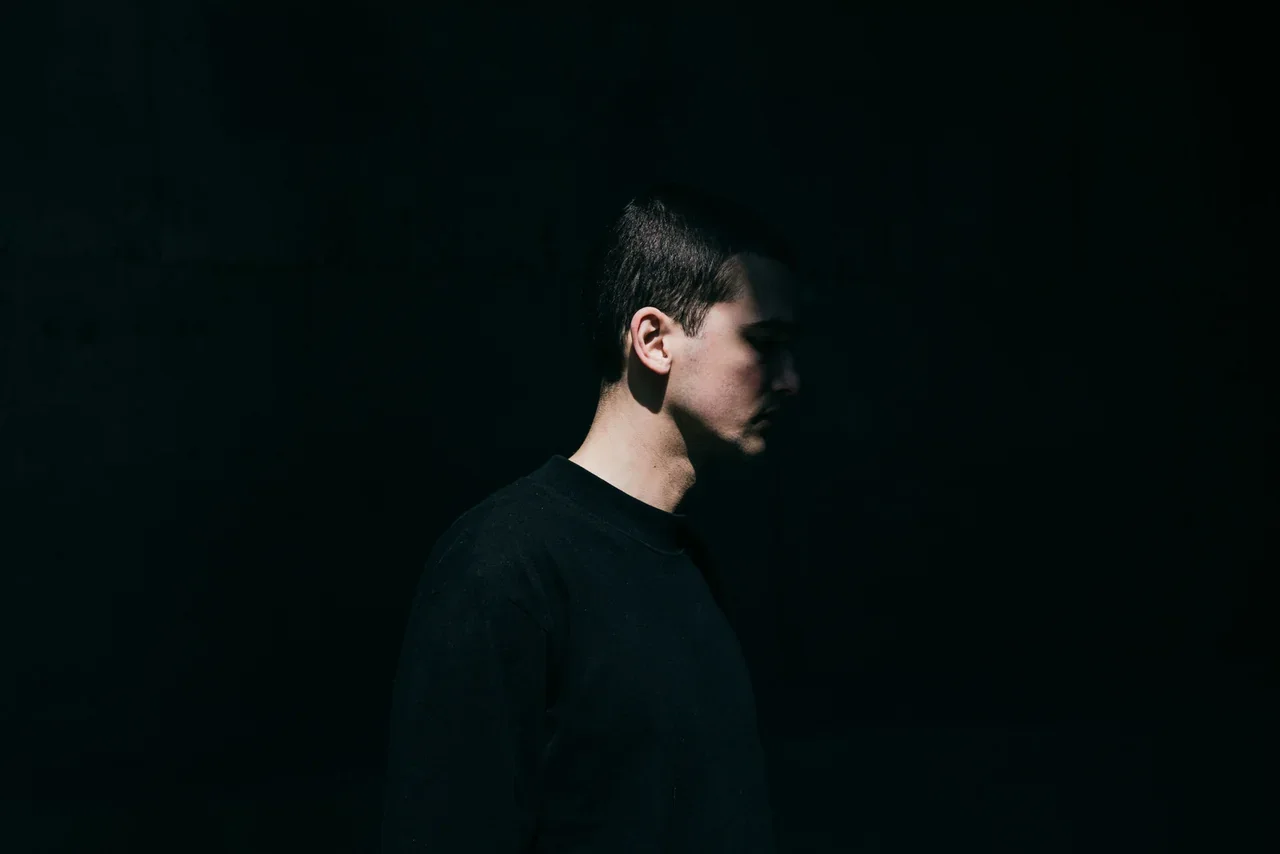
Then comes the quiet part, the replay, and the apology you’re already drafting in your head.
Where ADHD rage shows up, and who it lands on
The partner who hears a tone before the sentence is finished
If you have ADHD, you may be reacting to how something was said two words in, before you've heard what was said. Your partner experiences this as being attacked for asking a question. You experience it as being attacked by the question. Both of you are describing a real experience, and neither of you is describing the same event. Our post on ADHD and marriage covers the manager-and-managed dynamic that makes this worse: the more one partner has to prompt, the more prompts there are to react to.
The parent who slams the door and then can't look at their kid
A child pushing past your limit is the trigger people are most ashamed to admit. You raised your voice at a seven-year-old over shoes, and the look on their face is what you'll replay for a week. Your child needs you to repair it, and your child is also the person most likely to forgive you quickly once you do. Kids watch whether the storm has an ending more than they grade the storm.
The man who has never hit anyone and is still frightened of himself
Many men we talk with describe a strict internal line (no hands, ever) and a deep fear of what the volume alone is doing to the people they love. That fear means the values are intact and the behavior is out of step with them, which is the gap therapy for ADHD is built to close. The men who worry us are the ones who've stopped noticing.
The woman whose anger got called something else
Women with ADHD are more likely to have their rage attributed to hormones, stress, or personality, and to have turned it inward for years before it started leaking out. If the anger worsened in your forties, our post on ADHD and perimenopause explains why.
When anger has crossed a line
ADHD explains a short fuse. It does not excuse intimidation, name-calling, threats, destroying property to frighten someone, or physical harm, and a diagnosis is not a reason for a partner to stay in a home where they feel unsafe. If you're the partner reading this to decide whether what's happening to you is "just ADHD," the question that matters is whether you feel safe. If you don't, the National Domestic Violence Hotline is available 24 hours a day, and our crisis resources page lists local options. Treatment for the person with ADHD and safety for the person living with them are separate questions, and both deserve a direct answer.
If you're the partner, and you've started rehearsing how to phrase a simple request so it won't set something off, that rehearsal is a reasonable thing to bring to a conversation with us, with or without your partner in the room. Reach out for a free 20-minute consultation.
What helps with ADHD rage once the "just calm down" advice is off the table
The surge is mostly not negotiable in the moment. Everything around it is. These are the moves we see change the pattern.
Learn your 90 seconds. The physical surge of a strong emotion is brief, often under two minutes, if nothing feeds it. What feeds it is the story: the replay of what they said, the case you're building. The first skill is noticing the surge as a surge ("here it is, this is the flood") rather than as information about the other person. You won't catch it on the way up, but you can learn to recognize it once you're in it, which is enough to change what you do next.
Agree on an exit script before you need one. The most useful intervention for couples is a sentence negotiated on a calm Tuesday: "I'm leaving the room. I'm not leaving the conversation. I'll be back in twenty minutes." The partner agrees not to follow or escalate. The person with ADHD agrees that coming back is not optional, because the return is the part that rebuilds trust and the part people skip.
Map your fuel. For two weeks, note when the episodes happen: time of day, hours since you ate, hours of sleep, whether you were already overstimulated. Most people find a pattern. If it lines up with when a stimulant medication is wearing off, that's worth raising with your prescriber; we don't prescribe at Brilla, but we help clients bring specific, time-stamped observations into those appointments.
Separate the apology from the explanation. "I'm sorry I yelled at you. That wasn't okay." Full stop. The ADHD explanation can come later, in a calmer conversation, if your partner wants it. Delivered in the same breath as the apology, it lands as "I'm sorry, but," and your partner has heard that version enough times to stop believing the sorry.
Schedule the debrief for the next day. A short conversation, by agreement, the following afternoon: what was the trigger, what did it cost you, what's one thing either of us could do differently. Keeping it scheduled makes it survivable for both people and keeps the explosion from being the last word.
Treat the shame as the second episode. When "I'm a monster" arrives, treat it as the next wave rather than as insight. In acceptance and commitment therapy, the backbone of how we work with adults with ADHD, the move is defusion: "I'm having the thought that I'm a monster" instead of "I am a monster." The thought is allowed to be there. It is not allowed to decide whether you go back in the room. More on why ACT fits the ADHD brain is on our approach page.
Get the ADHD treated as ADHD. Anger is often the symptom that finally sends a man to therapy, and in our experience he's frequently never been assessed for ADHD at all. A 2021 meta-analysis in the Journal of Attention Disorders found that cognitive behavioral therapy improved emotional symptoms in adults with ADHD, with gains that held at follow-up. The evidence for generic anger classes in this population is much thinner.
What the rage is standing on
Since 2020 we've noticed that when an adult arrives asking how to stop the anger, the anger is rarely the foundation. It's the roof on a structure with other floors, and the roof is the part visible from the street.
- A diagnosis nobody made. For many men in particular, the explosions were the only ADHD symptom anyone could see, and nobody connected them to the lost keys, the unfinished degree, or the twenty years of "he's so smart, why can't he." The rage got treated as a temper while the ADHD went untreated, which kept the fuse short.
- A reserve that's been empty for years. Masking, overworking, and holding it together in public use the same executive fuel that would slow an emotion down at home. The people who get the worst of someone's anger are the people they feel safe enough to stop performing for, which is where the real cost of masking gets paid.
- A shame loop that's been running since childhood. The adult who yells and then disappears into self-hatred for three days is usually re-running a script written by a parent, a teacher, or a long line of report cards, and that script predates every episode.
Self-trust after the blowup
You don't rebuild trust with your partner by promising it will never happen again; you both know that promise. What rebuilds it, slowly, is a different ending: the leaving and the coming back, the apology without the footnote, the debrief that happens on schedule. Your partner stops bracing when the explosion stops being the last thing that happens.
You rebuild trust with yourself the same way: by becoming a person who knows what to do when they surge, since becoming a person who never surges is not on offer. That's a competence, and shame has a hard time arguing with competence. Healing here can look like a short fuse attached to a reliable repair.
If the apology has started to feel like a ritual that changes nothing, we can help you build an ending that does. Reach out for a free 20-minute consultation.

Sometimes the only move available is to close your eyes and wait for the wave to pass.
Frequently asked questions
Is ADHD rage a real thing?
Yes, though it isn't a formal diagnosis. Researchers increasingly describe emotional dysregulation, including sudden and disproportionate anger, as a core feature of adult ADHD rather than a separate problem. A 2018 review estimated that up to 70 percent of adults with ADHD experience some form of it. The term "ADHD rage" is informal shorthand for the fast, intense anger that arrives with almost no warning.
Why does my anger go from 0 to 100 with ADHD?
Because the buffer between feeling and action is thin. In ADHD, the executive functions that would normally slow an emotion down before it becomes behavior are under-resourced, so anger tends to arrive and be expressed almost simultaneously. There is often no build-up to notice, which is why advice that depends on catching anger early rarely works for adults with ADHD.
Does ADHD medication help with anger?
Sometimes, and usually less than it helps with focus. A 2018 review of medication trials found small-to-moderate effects on emotional dysregulation in adults with ADHD, compared with larger effects on core attention symptoms. Many people need a therapy component that specifically targets emotional regulation in addition to medication. Brilla provides therapy and assessment, not prescribing, and we can help you bring specific observations to your prescriber.
Is ADHD rage the same as intermittent explosive disorder?
No, they are separate diagnoses, though they can overlap. Intermittent explosive disorder describes recurrent aggressive outbursts that are the primary problem, while ADHD-related anger is one expression of broader emotional dysregulation that comes alongside inattention and impulsivity. A clinician familiar with adult ADHD can assess which picture fits, and whether both are present.
What should I do if my partner's ADHD anger scares me?
Take the fear seriously, regardless of the diagnosis. A short fuse can be part of ADHD, but intimidation, threats, and physical harm are never explained away by it. If you feel unsafe, contact the National Domestic Violence Hotline at 1-800-799-7233 or thehotline.org. If you feel safe but worn down, individual therapy for you, with or without your partner, is a reasonable next step.
What this means for you
- The anger you're ashamed of has a mechanism, and the mechanism is ADHD, not character.
- Standard anger management is built for anger that climbs. Yours lands, so the target has to move from prevention to recovery and repair.
- The shame afterward is a second episode, not accountability. Treating it as the problem it is frees you to go back in the room.
- Partners need an ending they can trust more than they need a promise. The exit script and the scheduled return are the ending.
- If you feel unsafe, that question comes before every other question in this post.
The people who search this phrase care so much that the caring turned into self-punishment, and the self-punishment got in the way of the fix. A short fuse is a nervous-system fact. What you build around it is a choice you get to make more than once.
To keep reading, our post on ADHD and emotional regulation covers the wider picture. If one or both of you has ADHD, our couples therapy for ADHD page explains how we work with both partners, and partners who want their own support can start with our page for partners of adults with ADHD. For an informal place to talk with others who get it, our community at Sacramento Women with ADHD is free to join.
