

ADHD Masking in Adults: What It Is, What It Costs, and Why "Just Unmask" Is Bad Advice
Most of what you've read about ADHD masking on social media misses the point. "Stop masking" has become advice the way "set boundaries" became advice — repeated until it sounds obvious, but stripped of the context that makes it actually useful. The mask was built for a reason. It often still has a job. And dropping it in the wrong context can cost you your relationships, your career, or your safety.
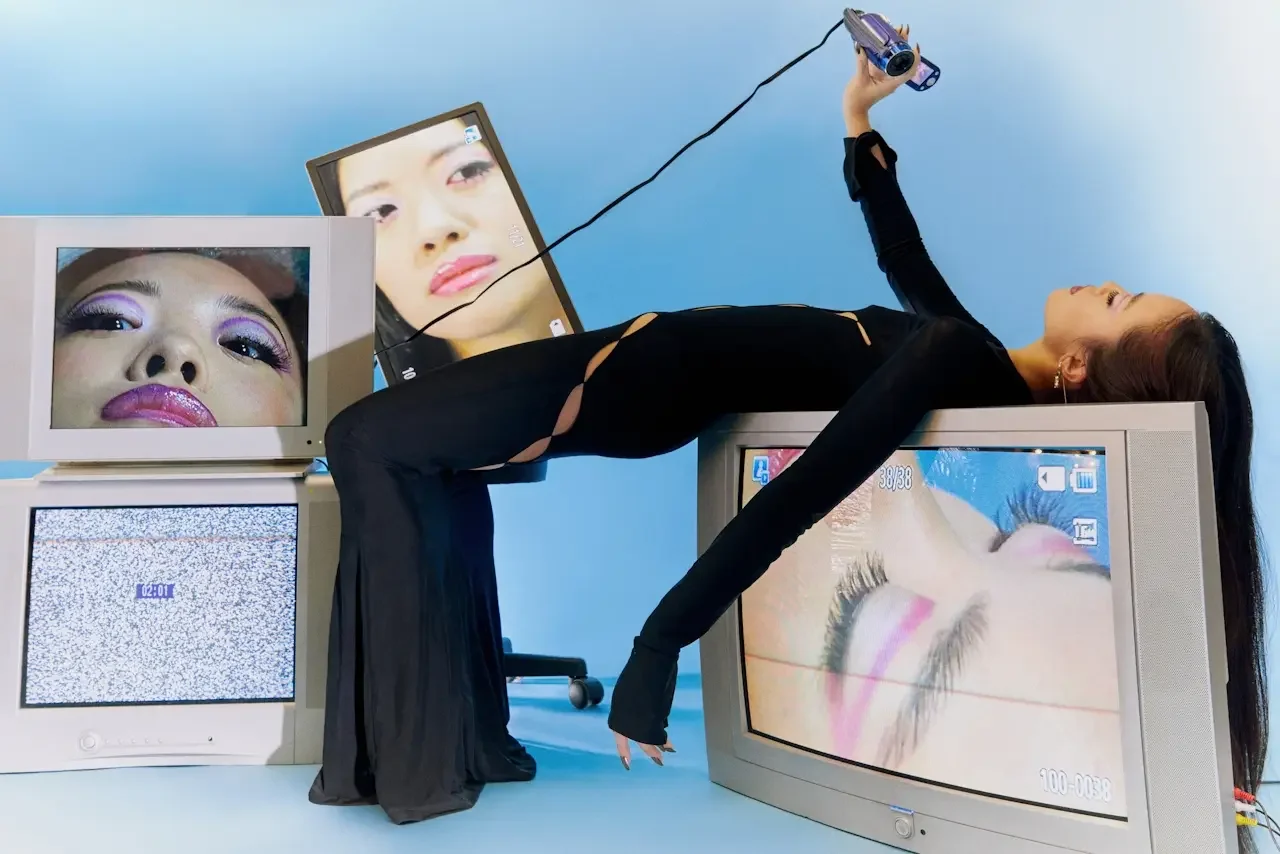
Self-surveillance is a full-time job. The woman with ADHD is excellent at it.
The real work isn't unmasking everywhere. It's understanding what your mask is doing, what it's costing you, and where it's actually safe to set it down.
This is a clinical guide for adults — especially late-diagnosed adults — who are tired and don't yet have words for why.
What it is: ADHD masking is the conscious or unconscious effort to hide, suppress, or compensate for ADHD symptoms in order to appear neurotypical — and for many late-diagnosed adults, especially women, it's the full-time job nobody sees.
What it costs: Burnout that doesn't respond to rest. Anxiety and depression diagnoses that conceal the underlying ADHD. Delayed diagnosis — because clinicians see the mask. Grief on diagnosis. Identity-level disorientation when the mask has been fused to the self for too long.
Why "just unmask" is bad advice: The mask was built for a reason and often still has a job. The real move is strategic — use the Brilla Three-Question Check: Is this context safe? What is the mask costing me here specifically? What would I do with the recovered energy? If you can answer yes / high / something meaningful, that context is where you start setting the mask down.
↓ Keep reading for what masking looks like in daily life, the long-term costs, and the Brilla Three-Question Unmasking Check.
What is ADHD masking?
ADHD masking is the conscious or unconscious effort to hide, suppress, or compensate for ADHD symptoms in order to appear neurotypical.
The term is borrowed from autism research and applied to ADHD over the last decade as clinicians have caught up with what late-diagnosed adults — especially women — have been describing for years. It's distinct from coping skills: coping helps you function, while masking helps you appear to function. The two often look identical from the outside, which is part of the problem.
A masked adult with ADHD can present as poised, organized, articulate, and capable. The work to look that way is invisible. So is the cost.
Why do adults with ADHD mask?
Because the world punishes the unmasked version, and masking works — at least short-term.
Recent research from King's College London found that girls mask their symptoms more than boys, contributing directly to under-diagnosis and to "significant negative consequences on mental health, social functioning, and academic achievement." The DSM-5 criteria for ADHD were built largely on observations of externalized, hyperactive presentations more common in boys — meaning the diagnostic system itself rewards masking by failing to detect it.
Layer onto that the gendered, racialized, and professional expectations most adults navigate daily. "Pull yourself together." "You're so smart, why can't you just focus?" "I never would have guessed you had ADHD." Each of those is a reinforcement schedule for the mask.
What does ADHD masking look like in everyday life?
A non-exhaustive list of what I see in my office:
Rehearsing what you'll say before a phone call, sometimes for hours
Staying late to "make up" for the time executive dysfunction stole during the day
Over-preparing for meetings, then being too exhausted to actually participate
Suppressing fidgeting in public, then having a sensory meltdown in the car
Saying yes to social plans you know you can't sustain
Reflexively apologizing for things that aren't your fault
Hyperscheduling every minute to avoid being "caught" disorganized
Borrowing neurotypical behaviors wholesale from a coworker or partner
Refusing to ask for workplace accommodations because it would blow your cover
Performing calm during high overwhelm
Treating every interaction as a small audition
If you read that list and recognized yourself, you are doing a lot of work that nobody around you sees.
What are the long-term costs of ADHD masking?
The research on this is now strong enough to take seriously.
Burnout that doesn't respond to rest.Clinical reviews of late-diagnosed women describe burnout as the predictable end point of years of masking, often coinciding with adulthood demands the mask can no longer absorb.
Anxiety and depression diagnoses that conceal the underlying ADHD. ADDitude's clinical reporting notes that internalized conditions — anxiety, depression, social anxiety — frequently develop as a downstream consequence of hidden, untreated ADHD. Many women are first diagnosed with anxiety or depression when ADHD is actually the upstream cause.
Delayed diagnosis — often by the clinician. A poised, organized, articulate woman walks into an assessment, and the clinician concludes she can't have ADHD. The clinician is looking at the mask. The patient herself may believe she can't have ADHD because she doesn't look like the version she's been told to look for.
Grief on diagnosis. A 2025 peer-reviewed study published in Scientific Reports found that for women diagnosed late, the diagnosis is often not pure relief — many describe grieving the years of effort that shouldn't have been required and the life that might have existed with earlier support. The study explicitly documents "guilt, shame, and negative self-perception due to delayed diagnoses."
Identity-level disorientation. When the mask is fused to the self for long enough, you stop knowing which parts of you are you.
Physiological cost. Sustained masking is metabolically expensive. The body keeps the bill.
Comorbid diagnoses that pile on. Anxiety, depression, PMDD, eating disorders, and substance use show up at elevated rates in undiagnosed adult ADHD, often as the body's attempt to manage what the mask is hiding.
About Brilla Counseling: Brilla Counseling for ADHD & Anxiety is a neurodivergent-affirming therapy clinic in East Sacramento, CA, offering in-person sessions and online therapy throughout California. We specialize in adults, women, and late-diagnosed clients with ADHD. Schedule a free 20-minute consultation →
Is "unmasking" always the goal?
No. And this is where most of the popular advice goes wrong.
Sometimes the mask is keeping you employed. Sometimes it's keeping you housed. Sometimes it's keeping you safe in a family of origin or a workplace that would punish the unmasked version. Reflexive "unmasking" advice that doesn't account for your actual context can do real harm — including by piling shame on top of the burnout you came in with ("why am I still masking, I should know better by now").
The question is not "should I unmask?" The question is: where is it actually safe to set the mask down, and what would I want to do with the energy I get back?
The Brilla Three-Question Unmasking Check
Before you try to unmask in any given context, ask:
Is this context safe? Will I face material consequences — job, relationship, housing, custody, immigration status, physical safety — for being unmasked here?
What is the mask costing me here specifically? Time, energy, health, authenticity, the ability to form real connection — name what you're actually losing.
What would I do with the energy if I stopped masking in this one space? Sometimes the answer is "rest." That is a complete answer.
If you can get to "yes, this is safe — the cost is high — and I have something I want to spend the recovered energy on," that context is a candidate for unmasking. If any one of those three is missing, keep the mask on for now and spend your unmasking work somewhere it will actually pay off.
Most adults I work with have one or two contexts where the math works clearly — usually a long-term relationship, a close friend, or a therapy room. Start there. Build evidence that the unmasked version of you is allowed to exist somewhere. The energy that comes back is real, and you can use it.
About Brilla Counseling: Brilla Counseling for ADHD & Anxiety is a neurodivergent-affirming therapy clinic in East Sacramento, CA, offering in-person sessions and online therapy throughout California. We specialize in adults, women, and late-diagnosed clients with ADHD. Schedule a free 20-minute consultation →
What You’re Really Asking About ADHD Masking
When adults search for information about ADHD masking, they are usually actually wondering one of these:
Whether they have ADHD at all, given that they "look fine."
Whether their anxiety or depression diagnosis is missing something bigger.
Whether their burnout has a name — and a different solution than "rest more."
Whether the cost of being "high-functioning" is sustainable for another decade.
Whether they should pursue a formal assessment now, in adulthood, when they've "managed this long."
If any of those is the question you're actually carrying, the masking conversation is upstream of a much bigger one. The assessment route is worth pursuing for many adults who have masked successfully for decades — and especially for those who have. "I look like I have it together" is not evidence against ADHD. In a late-diagnosed adult, it is often evidence of how hard you have been working.
What this means for you
Masking is not a personality flaw. It is an adaptation your nervous system built to keep you functional in a world that wasn't built for you. Treat it with respect.
Long-term, undirected masking is metabolically and psychologically expensive. The cost compounds — anxiety, depression, burnout, and identity disorientation are common downstream effects, not separate problems.
"Unmask everywhere" is bad advice. "Unmask strategically, in safe contexts, with something to spend the recovered energy on" is the actual move.
If you've avoided ADHD assessment because you "look like you have it together," that observation is evidence for the assessment, not against it.
The right clinician — neurodivergent-affirming, trained in adult ADHD presentations — will see the mask. Find one before you spend another decade alone with this.
About Brilla Counseling: Brilla Counseling for ADHD & Anxiety is a neurodivergent-affirming therapy clinic in East Sacramento, CA, offering in-person sessions and online therapy throughout California. We specialize in adults, women, and late-diagnosed clients with ADHD. Schedule a free 20-minute consultation →
