

RSD in Women with ADHD: Why Criticism Feels Like Physical Pain
Updated September 2026
You introduce two friends at a dinner you organized. They hit it off. By the time you're home, the story in your head is finished: they don't need you now. You were the connector, and connectors get replaced.
Or a friend takes three hours to answer a text. You reread what you sent. You replay the last time you saw her, looking for the moment you said too much. When she finally writes back ("sorry, work was insane"), the relief lasts about a minute before the next round starts.
If this sounds familiar, you may be experiencing rejection sensitive dysphoria (RSD), a pattern of intense emotional pain in response to real or perceived rejection that is common in ADHD and hits especially hard for women, including those who were diagnosed late or spent years being told they were too sensitive. It is not a character flaw and it is not a thin skin. It is a nervous system doing what it was trained to do.
This post covers what RSD is, why it feels physical, what it looks like in the lives of women with ADHD, and the approach we use at Brilla to work with it. I'm Lauren Dibble, LMFT, and this is what I see in the room. Brilla Counseling works with women with ADHD in person in Sacramento, CA and through online therapy throughout California.
TL;DR: RSD in Women with ADHD
In one sentence: RSD is intense emotional pain triggered by perceived rejection, criticism, or failure. For ADHD brains that pain is neurologically real, and it can be relived long after the moment has passed.
Why women with ADHD experience it more intensely: Years of masking trained the nervous system to scan for rejection. A history of criticism primes the inner critic to agree with any new one. Hormonal shifts, especially the week before menstruation, amplify the response.
What it does to friendships: The women I work with often want connection more than most people and pull back from it because the spiral after every interaction costs too much.
How we work with it: Not by arguing with the thought. By dropping anchor, taking care of yourself, refusing to feed the urge for reassurance, and moving your energy toward the friendships that meet your needs. ACT is the framework.
↓ Keep reading for symptoms, the RSD spiral, what happens when it turns into a loop, and the approach that changes it.
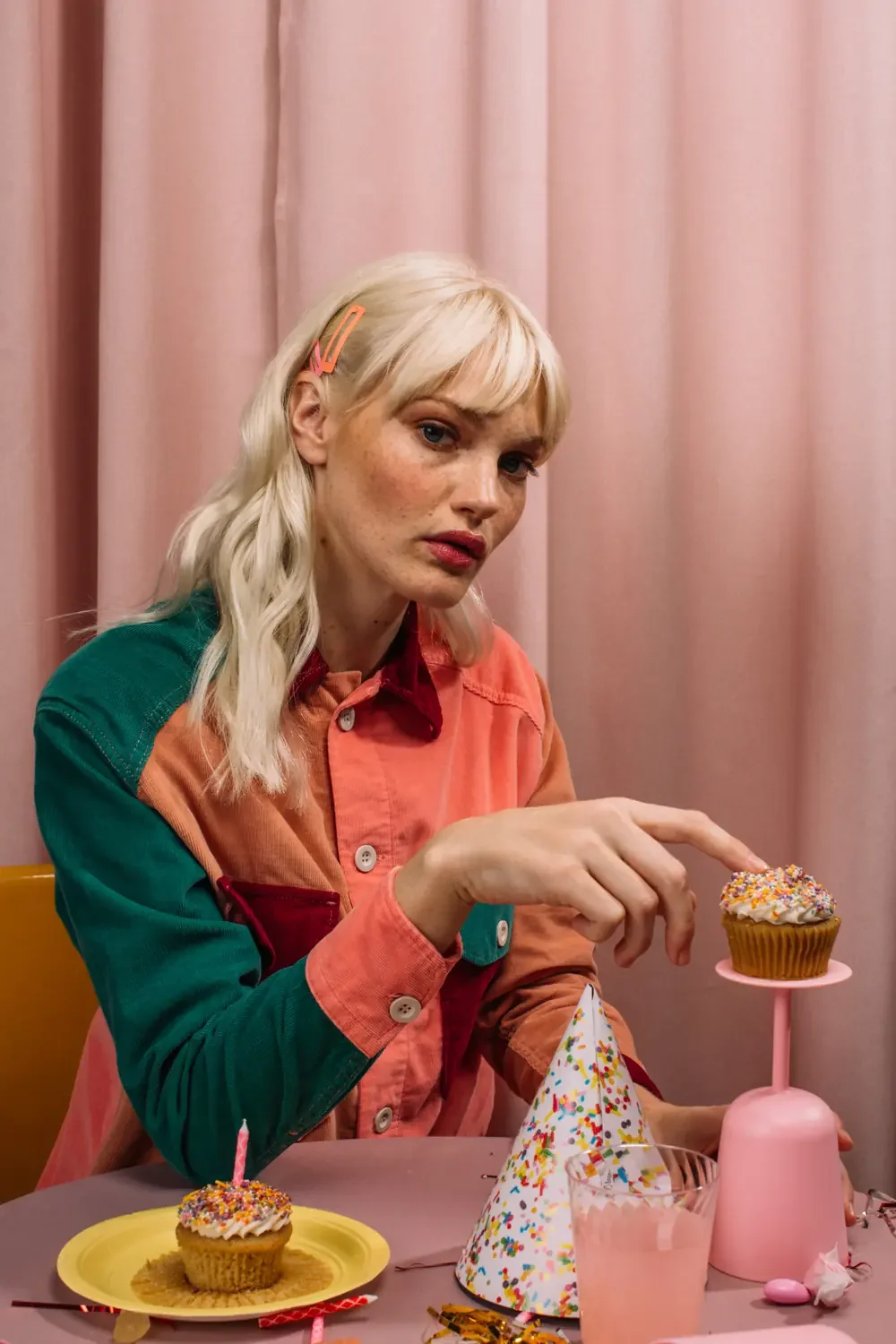
Two people canceled, and now the whole party feels like a verdict.
What Is RSD (Rejection Sensitive Dysphoria)?
RSD stands for rejection sensitive dysphoria: intense emotional pain triggered by the perception of rejection, criticism, or failure. Some clinicians use the broader term rejection sensitivity; in ADHD the two describe the same experience at different intensities. The key word is perception. The rejection doesn't have to be real. A neutral comment, a delayed text, or a change in someone's tone is enough, and the nervous system responds as if something harmful has happened.
RSD is not a diagnosis in the DSM-5. The term was popularized by ADHD clinician William Dodson to describe a pattern many people with ADHD recognize instantly. What is well established is the thing underneath it: emotional dysregulation is a core part of ADHD for a large share of adults, with estimates running from roughly 30 to 70%. RSD is one of its most common expressions.
The research on RSD specifically is early. A handful of small qualitative studies since 2023 have asked people with ADHD what RSD is like for them, and what they describe (bodily pain, masking to hide it, then withdrawing from people) matches what I see in practice with late-identified women almost exactly. That population has not been studied on its own. What follows draws on both the research that exists and years of clinical work with the women it leaves out.
Why RSD Feels Like Physical Pain
Social rejection recruits the same brain regions that process the distress of physical pain, the dorsal anterior cingulate cortex and anterior insula. This is one of the most replicated findings in social neuroscience. Later work using pattern analysis found the two kinds of pain use distinct patterns within those shared regions, which is why the comparison holds without being literal. The pain is real. It is not the same as a broken bone, and it is not imaginary.
There's a second finding that matters more for RSD. Physical pain fades when the injury heals. Social pain can be re-experienced just by replaying the moment, and reliving it reactivates the same affective pain regions. A comment from Tuesday can hurt on Friday because your brain runs it again.
For people with ADHD, differences in dopamine signaling and prefrontal activity make emotional responses faster and harder to regulate. The rejection lands harder, the replay is harder to stop, and the internal resources you'd use to talk yourself down are the ones ADHD takes offline first.
RSD Symptoms in Women with ADHD
RSD isn't a checklist diagnosis, but rejection sensitivity in women with ADHD shows up in recognizable ways. The physical symptoms of RSD are often the first thing women notice.
In your body:
- A sudden drop in your stomach, chest tightness, or a racing heart after a comment, a look, or a silence
- Nausea, dizziness, or feeling shaky after a perceived slight
- An energy crash afterward that can last hours or days
In your thoughts:
- Replaying conversations for hours, searching for what you did wrong
- Assuming you know what someone thinks of you, and assuming it's bad
- Reading neutral signals (a short reply, a pause, a change in tone) as rejection
- A specific story that runs every time: I got lucky to be included, and luck runs out
In your behavior:
- Over-apologizing and people-pleasing to get ahead of any possible disapproval
- Perfectionism, sometimes to the point of burnout, so no one can find fault
- Sudden defensiveness or anger when you feel judged
- Sending a reassurance text you can't not send
- Withdrawing from people you care about after an RSD episode, and eventually from new people before an episode can happen
In your mood:
- Going from fine to devastated in seconds after a minor interaction
- Shame that feels out of proportion, followed by shame about the shame
- Jealousy or a sense of being left out or replaced, especially in group settings
The mismatch between the trigger and the reaction is itself part of the pattern. A passing comment can produce the same pain as a real rejection, which makes you feel like you're overreacting, which adds shame to the original hurt.
Why Women with ADHD Experience RSD More Intensely
Rejection sensitivity in women with ADHD isn't more intense because women are more sensitive. It's the intersection of ADHD, how girls are socialized, and what happens when a diagnosis comes decades late.
A history of rejection that started early
Girls with ADHD experience more peer rejection and less stable friendships than other girls in every study that has looked. Stephen Hinshaw's longitudinal work at Berkeley found two patterns: girls with hyperactive or impulsive ADHD were actively rejected by peers, and girls with inattentive ADHD were simply left out. The women I work with grew up inside one of those patterns. By adulthood, many have a lifetime of evidence that belonging is conditional.
The masking factor
Many women with ADHD spend years or decades masking their symptoms to fit in. Masking requires constant self-monitoring: Am I acting normal? Are people judging me? Did I just talk too much? That hypervigilance builds a nervous system primed to detect rejection. The early RSD research found the same sequence: people mask to hide the pain, and the masking itself leads to withdrawal and loneliness.
When you've spent your whole life trying to be good enough, any hint of criticism feels like proof the mask slipped.
Criticism that arrives with company
Adults with ADHD report being criticized more than other people, and that history is part of why they are harder on themselves. Teachers said lazy. Parents said not trying. Partners said forgetful. Over time those messages become an internal voice that is already primed to agree with any external one. A new criticism doesn't arrive alone. It arrives with every earlier version attached, and the brain reads it as confirmation rather than information.
This is why "just take the feedback" doesn't work for RSD. The content of the criticism and the pain of receiving it are two separate things, and until the pain settles, the content is unreachable.
Hormonal amplification
ADHD symptoms fluctuate with the menstrual cycle. During the luteal phase (roughly the two weeks before your period), estrogen drops after ovulation while progesterone rises, then both fall sharply in the final week. Recent reviews find that women with ADHD show worse emotional regulation, attention, and impulsivity in the mid-luteal and premenstrual phases, along with reduced medication effect, though the authors note the research is still small. Women with ADHD are also at higher risk for PMDD. Many of the women I see say RSD is unbearable in the premenstrual week and manageable two weeks later. That's not imagination. That's a cycle.
Perimenopause, pregnancy, and postpartum can intensify RSD for the same reason. If your rejection sensitivity has a rhythm to it, hormones are part of the picture.
The late-diagnosis effect
Women diagnosed later in life carry a particular version of RSD: the pain of realizing how much they struggled alone, how many friendships ended in misunderstandings, and how much shame they carried for things that had a name the whole time. That backlog makes present-day rejection sensitivity land on a much bigger wound.
She set out enough glasses for all the guests who said “maybe.”
The RSD Spiral: What It Does to Friendships
This is the part of RSD that brings women into my office, and the part most articles skip. RSD does not just hurt after conflict. It runs after ordinary interactions, and it can run after good ones.
Here's the cycle as I see it:
- The interaction. A dinner, a group chat, a party you hosted. Nothing went wrong.
- The replay. On the drive home you review it. Did I talk too much? Was I too honest? Did she seem off when I said that?
- The story. Every replay lands on the same conclusion, in a different costume. I was lucky to be included. My friends are better than me, so eventually they'll just need each other. Now that they know each other, they don't need me. They're only my friends because I throw the parties. Something about me isn't good enough and everyone else can see it.
- The pull back. Withdrawing feels like protection. Skip the next thing. Don't reach out first. Don't introduce people anymore.
- The confirmation. The withdrawal thins the friendship, which feels like proof the story was right.
Large groups make it worse. Group settings involve more signals to misread, more people to compare yourself to, and more chances to feel replaced. Many women tell me they watch other people tolerate a boring conversation or a bad dynamic with apparent ease and conclude something is wrong with them for finding it unbearable. That is ADHD, not a character defect, and the shame about it feeds the spiral.
The result is a specific kind of loneliness. These are often women who thrive on connection, who are the ones organizing the dinners and remembering the birthdays. They pull back not because they want less, but because putting themselves out there costs a spiral every time, and the friendships they keep end up feeling shallow because they never let anyone all the way in. The early research describes the same outcome: rejection sensitivity may push people with ADHD toward superficial friendships and withdrawal from the relationships they want.
When the Spiral Becomes a Loop: RSD, Reassurance, and OCD
Sometimes the replay turns into something with more urgency behind it. You feel you have to text your friend to check that things are okay. You feel you have to review the conversation one more time, then one more time after that. The urge is strong enough that not acting on it feels impossible.
This is where RSD overlaps with obsessive-compulsive patterns, and it's worth naming plainly. Reassurance-seeking works the way any compulsion works: relief for an hour, and a stronger urge next time. Mental replay can function the same way. Some women meet criteria for OCD or relationship OCD. Many don't, and the loop still runs, because when ADHD and anxiety meet, the brain can get stuck in obsessive-compulsive cycles that never qualify as a full diagnosis but still need to be managed.
The plan is the same either way: interrupt the loop and build your tolerance for uncertainty rather than feeding it. At Brilla we use exposure and response prevention (ERP) skills for mental compulsions like reassurance-seeking and replay, in small steps that build your strength to opt out of the big relationship compulsions. When OCD needs its own treatment, we refer to an OCD specialist.
How We Work With RSD (and Why We Don't Argue With the Thought)
Almost every woman who comes to me has already tried arguing with the thought. Listing the evidence that her friends do like her. Telling herself she's being irrational. It hasn't worked, and she has usually concluded that's her fault.
It isn't. Trying to push a thought away makes it come back harder; that's one of the most replicated findings in psychology. And reappraising a thought mid-spiral requires exactly the prefrontal resources ADHD takes offline when emotions run high. In my practice with late-identified women, thought-challenging hasn't held up in the moment it's needed. So we don't spend energy there. We use an Acceptance and Commitment Therapy (ACT) approach instead. The thought stays. The energy goes somewhere better.
1. Start with validation
The pain is real, the sensitivity has a history, and neither one is a flaw. This sounds simple. For a woman who has been told she is too sensitive since childhood, it is often the first time the reaction has been taken seriously instead of corrected.
2. Let the spiral be there without feeding it
When the spiral starts in the car on the way home, the goal is not to make the thoughts or feelings go away. It's to stop fighting them. Notice the thought. Name it: "the luck-runs-out story is running." Let it be present without arguing with it and without acting on it.
3. Drop anchor
Dropping anchor is an ACT skill for exactly this moment. Acknowledge what's showing up inside you. Come back into your body: feet on the floor, hands on the wheel, breath. Engage with what's in front of you. You're not trying to feel calm. You're widening your attention so the spiral is one thing in the room instead of the whole room.
4. Do something for yourself instead of staying inside your head
After anchoring, take a proactive step. Make tea. Take a shower. Put on the show you like. Go to bed. Anything that moves you from fighting off your thoughts to taking care of yourself. The spiral will still be running. You're not letting it run uninterrupted.
5. Don't feed the urge for reassurance
If the pull to text "are we okay?" shows up, that's the compulsion talking. Pause. Sit in the uncertainty on purpose. You may not know whether she's upset with you for a few days, and you can survive not knowing. Each time you don't send the text, the urge gets a little weaker. If the urge is too big to opt out of on your own, that's what ERP is for.
6. Check whether your energy and boundaries are working for you
Many women with RSD overextend to earn belonging: hosting every gathering, being the one who organizes, saying yes to everything so no one can say they're not enough. I ask directly: are the big events serving you? Are your own needs getting met in these friendships, or are you providing opportunities for everyone else? Often the answer is that the friendships are running on her energy and giving little back. That's information.
7. Move toward the friendships you want
This is where the energy goes instead of into the thought. When someone tells me "my friends are better off without me," I don't challenge it. I ask how she wants to move toward connection anyway. That might mean deepening one friendship instead of maintaining ten. Choosing one-on-one time over large groups. Exploring new spaces where she doesn't have a history. Letting a friendship that isn't meeting her needs get quieter without treating that as failure. Values-based action, in small steps, while the spiral does whatever it does.
8. Build self-compassion
RSD thrives in shame. Adults with ADHD have lower self-compassion than other people, partly because they've been criticized more. Acknowledge the pain: "This hurts, and it makes sense that it hurts." Normalize it: "This is RSD and ADHD, not evidence about me." Offer yourself what you'd offer a friend in the same spot.
9. Track your cycle
If you menstruate, log RSD episodes alongside your cycle for two or three months. If the premenstrual week is the worst week, you can plan around it: schedule harder conversations for the follicular phase, expect the spiral in the luteal phase and treat it as weather, and talk with your prescriber about whether medication adjustments make sense in that window.
10. Consider medication
ADHD medication can help with emotional regulation for some people. If you're not on medication, or your current medication isn't touching the emotional side, that's worth discussing with your prescriber.
The cake says, “It’s Your Day.” The empty chairs say otherwise.
What Changes
After a few months of this work, the women I see report the same things in roughly the same order. They let go of friendships that weren't meeting their needs, without a dramatic ending, just less effort in a direction that wasn't giving back. They redirect the energy that used to go into spiraling into reaching out and connecting. They get kinder to themselves after a hard interaction. And the spiral still starts, because RSD doesn't disappear, but it no longer runs uninterrupted from the car ride home through the next three days.
That last one is the real outcome. Not the absence of RSD. The end of the uninterrupted spiral.
RSD at Work and in Partnerships
Everything above applies beyond friendship. At work, RSD turns feedback into an event: a "quick question" from a manager, a meeting scheduled without explanation, a corrected draft. The same skills apply. Anchor, separate the pain from the content, let the pain settle before you respond to the content, and don't send the over-apology.
In partnerships, RSD often looks like reading a partner's tiredness or short answer as rejection, then withdrawing or seeking reassurance. A conversation about RSD when you're calm, not mid-episode, helps most partners understand that the reaction is about your wiring and not about them, and lets you agree in advance on what helps (direct communication, a clear "I'm not upset with you") and what doesn't ("you're overreacting").
RSD Therapy for Women with ADHD in California
If rejection sensitive dysphoria has been shaping your friendships and your sense of yourself, therapy that understands ADHD and RSD together can change it. Brilla Counseling is an ADHD-specialized practice in Sacramento, CA, and we work with women with ADHD across California through online therapy. Whether you're in Los Angeles, San Diego, the Bay Area, or a town with no ADHD specialist nearby, you can work with a therapist who knows this pattern from your own home. In-person sessions are available at our Sacramento office.
Our therapists use ACT, ERP skills for mental compulsions, and DBT skills for distress tolerance to help you interrupt the spiral, stop feeding the loop, and put your energy into the relationships you want.
If you'd like to talk it through, schedule a free 20-minute consultation.
FAQ: RSD in Women with ADHD
Is RSD real? Yes. The experience is real and increasingly documented, and research on social rejection shows it activates the same brain regions that process physical pain. What RSD is not is a formal diagnosis. It's a clinical description of a pattern of emotional dysregulation that is common in ADHD.
Is RSD an official diagnosis? No. Rejection sensitive dysphoria does not appear in the DSM-5. The term was popularized by ADHD clinician William Dodson. Emotional dysregulation in ADHD, which RSD is one expression of, is well documented in the research.
Does everyone with ADHD have RSD? No. Emotional dysregulation is common in ADHD, but not everyone experiences it as rejection sensitivity, and intensity varies widely.
Why is RSD worse in women with ADHD? Rejection sensitivity in ADHD women has a history behind it. Girls with ADHD experience more peer rejection growing up, many women spend years masking, late diagnosis leaves a backlog of shame, and hormonal fluctuations across the menstrual cycle amplify emotional reactivity, especially in the premenstrual week.
What's the difference between RSD and anxiety? Anxiety is usually anticipatory: worry about what might happen. RSD is triggered by a specific perceived rejection and hits fast, often with physical symptoms, then leaves shame behind. The two overlap often in women with ADHD.
What's the difference between RSD and OCD? RSD is the pain response to perceived rejection. OCD involves intrusive doubts and compulsions done to relieve them. They overlap when the RSD spiral turns into compulsive reassurance-seeking or mental replay. Some women meet criteria for OCD; many are stuck in a similar loop without a full diagnosis. Both respond to the same approach: interrupt the loop and build tolerance for uncertainty.
Does RSD get worse before your period? For many women, yes. Estrogen decline in the luteal phase worsens emotional regulation in ADHD, and rejection sensitivity often peaks in the week before menstruation. Tracking your cycle alongside RSD episodes will show you whether this is true for you.
What is the best treatment for RSD? There is no single treatment and no trial has studied late-identified women with ADHD specifically. In our practice, an ACT approach (accept the thought, drop anchor, take care of yourself, move toward the relationships you want) combined with ERP skills for reassurance-seeking and replay is what holds up. ADHD medication helps some people with the underlying emotional dysregulation. Brilla offers this work online anywhere in California and in person in Sacramento, CA.
