

Can a Brain Scan Diagnose ADHD? Where the Science Actually Stands
The diagnosis is months old now, and you still catch yourself wondering if you talked your way into it. Whether you described your life convincingly enough that a stranger nodded and wrote it down. The relief you felt at being seen has a quieter feeling living underneath it, and that feeling keeps asking the same question: what if I made this up?
So you start looking. Not for treatment. For proof. Something you could hold up the next time the doubt comes back, or the next time someone you love asks how they really know. A scan. A blood test. A picture of your brain with the problem circled in red. Something that cannot be argued with, including by you.
If this sounds familiar, you are not the only one refreshing search results late at night, wishing ADHD came with a photograph.
TL;DR — Can a brain scan diagnose ADHD?
- What it is:
- A brain scan (SPECT, MRI, PET, or EEG) measures brain structure or activity. No scan can currently diagnose ADHD in an individual person.
- What it costs:
- Chasing a definitive scan can run into hundreds or thousands of dollars, expose you to radiation in the case of SPECT, and leave the real question untouched. The wish for a scan is usually a wish to be believed.
- Why "just get a scan to be sure" is bad advice:
- No major professional body endorses brain imaging to diagnose ADHD, the research that does exist was built mostly on male brains, and ADHD looks less like one condition with one signature than like thousands of small genetic and developmental differences arriving at similar symptoms by different roads.
↓ Keep reading for what a scan can and cannot show, who was actually in the studies, why the certainty you want would not come from a scan even if one existed, and seven things that help when you cannot stop doubting your own diagnosis.
At Brilla Counseling in Sacramento, we specialize in helping women with ADHD make sense of a diagnosis that often arrives late and gets doubted early. In over a decade of clinical work with neurodivergent women, in our East Sacramento office and via telehealth across California, we have found that the hunger for a brain scan is rarely about the scan. It is about wanting the diagnosis to be real enough to hold.
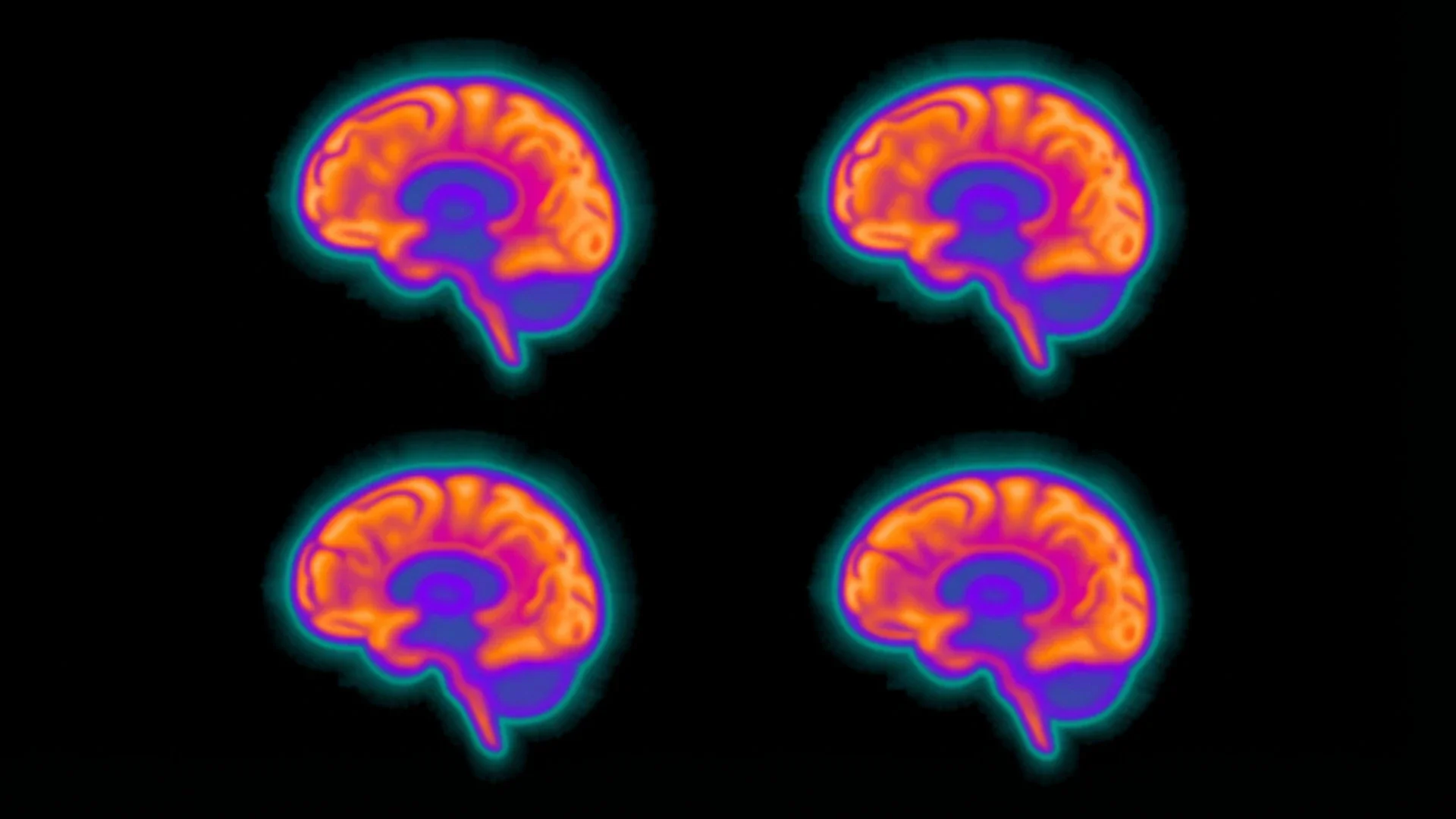
Can a brain scan diagnose ADHD?
No, not yet. Brain imaging has taught researchers a great deal about how ADHD brains tend to differ on average. It has not produced a scan that can look at one person and return a clean yes or no.
Major professional organizations do not endorse imaging as a way to diagnose ADHD, and the medical consensus is that scans like MRI, PET, and CT cannot do this on their own (ADDitude, summarizing the position of professional bodies including the AMA). The honest clinical version is simpler still: there is no validated biomarker for ADHD. Diagnosis still rests on history and observation.
You may also have seen ads for Amen Clinics, which markets brain SPECT scans and promises a clearer answer about ADHD and its subtypes. The wider scientific community has remained skeptical of those claims for years (Science-Based Medicine). SPECT also involves injecting a radioactive tracer, so it is not a low-stakes "why not."
Does a real diagnosis need an objective test?
Not the way you have been told. You have probably absorbed the idea that a real medical diagnosis comes with a number attached. A scan, a lab value, a biomarker. We want to gently challenge that, because most of medicine does not work that way, and neither does most of psychiatry.
Migraine has no blood test. Many conditions are diagnosed by a trained clinician who synthesizes your history, your symptoms, and how they affect your life. The absence of a scan for ADHD is not evidence that ADHD is soft or imaginary. It is evidence that the science is being honest about what it can and cannot yet measure.
Here is the harder part to sit with. Even if a scan arrived tomorrow, it probably would not hand you the certainty you are actually chasing. We will come back to why.
If this is resonating, you do not have to sort it out alone. We work with women who are second-guessing their own diagnosis every day. Reach out for a free 20-minute consultation.
Why is there no definitive brain test for ADHD?
The biology is real but blurry. There are two honest reasons.
First, the brain differences researchers find in ADHD show up at the level of group averages, with a lot of overlap between people who have ADHD and people who do not. Your individual brain could sit comfortably inside the so-called typical range on any given measure and you could still very much have ADHD.
Second, ADHD does not appear to have one signature. As one psychiatry researcher described it, there is no single fingerprint in the brain for ADHD; instead there is a combination of features that add up (AAMC). A scan looks for a signature. ADHD keeps refusing to provide one.
Who was actually in these brain studies?
Mostly boys and men. This is the part that should make you pause.
When researchers reviewed the structural imaging studies of ADHD, they found that over 80 percent of participants were male, and roughly half the studies used entirely male samples (Valera et al., reporting on a meta-analysis of structural ADHD imaging). For a long stretch, the picture of "the ADHD brain" was built largely from the brains of boys and men.
That matters, because ADHD tends to present differently across sexes. Girls and women show more inattentive symptoms and more internalizing distress, and they have historically been recognized and referred far less often (Hinshaw, reviewing four decades of research on ADHD in females). Childhood diagnosis ratios have run anywhere from 2 to 1 up to 10 to 1 in favor of boys, narrowing toward even by adulthood (Frontiers in Human Neuroscience, 2019).
So even in the hypothetical world where a scan-based marker existed, there is a fair question about whose brains it would have been calibrated on, and whether it was ever calibrated on brains like yours. As a late-diagnosed woman with ADHD myself, I find this less infuriating than clarifying. The test you have been wishing for was being designed without women in the room.
Is ADHD highly heritable? What about genetics?
Yes, around 74 percent. ADHD is one of the most heritable conditions in psychiatry. Twin studies put its heritability near 74 percent, similar in men and women (Faraone and colleagues). You would think a genetic signal that strong would hand us a clean test. It has not, and the reason is the most interesting part of this whole story.
The largest genetic studies to date have identified around 27 specific genetic locations linked to ADHD, and estimate that roughly 7,300 common variants together explain most of the genetic signal they can measure, with each variant contributing only a sliver (Nature, drawing on the Demontis 2023 GWAS). Those common variants account for only about 14 to 22 percent of the heritability. A large share is still unaccounted for, which means there are genes left to discover.
On top of that, most of the variants linked to ADHD are shared with other conditions, including autism, depression, and schizophrenia. Genetically, ADHD looks less like a single switch and more like thousands of tiny dials, set differently in different people, overlapping with traits we do not call ADHD at all. A scan cannot photograph that. A single gene test cannot capture it either. A group of symptoms that look like ADHD can clearly arrive by many different biological roads.
Are brain scans useless for everything, then?
No. They are aimed elsewhere, and that distinction matters.
I want to be careful here, because the honest answer is not "scans are nonsense." They are genuinely useful, just for different questions than this one. My own daughter, who has severe epilepsy, has had a SPECT scan at the Cleveland Clinic. In that setting, functional imaging can help localize where seizure activity is coming from. It is a real clinical tool doing a real job.
What stayed with me, talking to neurologists at the top of that field, is this: the better the expert, the more carefully they hold what they do not yet know. At the leading edge, there are more open questions than tidy answers. That is not a flaw in the science. It is what rigor actually sounds like. When someone offers you total certainty, they are usually selling something.
And the gap is the whole point. Imaging is being refined for neurological states, seizures, strokes, tumors, structural injury, far faster and more concretely than it is for the diffuse, distributed, still-being-mapped territory of mental health. A tool that can help pinpoint a seizure focus is still a long way from confirming ADHD in one individual. Neurology will get its imaging answers well before psychiatry gets hers.
So when Amen Clinics markets brain SPECT scans as a way to diagnose ADHD and sort it into subtypes, the problem is not that imaging is fake. The problem is that a tool which is promising for some neurological questions is being sold as far more certain, for this particular question, than the evidence supports.
When does the wish for a scan get loudest?
It tends to spike at a few specific moments. See if any of these are yours.
- After an evaluation that felt too easy. You expected something clinical and concrete, and instead you answered questions and filled out a rating scale, and walked out half-wondering if that was really it.
- When someone you trust asks how they know. A partner, a parent, a doctor. Sometimes gently, sometimes not. The question lands because you have asked it yourself.
- When the old story creeps back. The one where you were lazy, dramatic, too sensitive, not trying hard enough. A scan feels like it could finally overrule that voice.
- When the algorithm sells you certainty. An ad, a glowing brain image, a clinic promising to show you what is really going on. After years of being dismissed, "proof" is a powerful pitch.
What actually helps when you are craving certainty?
You cannot buy certainty from a scanner. You can do a handful of things that get you closer to what you were actually after.
- Name what the certainty is for. Before booking anything, get specific about what you are really trying to buy. Permission to rest? An end to an argument? Relief from doubting yourself? Naming the real target tells you whether a scan could ever hit it.
- Get a thorough assessment, not a single test. A good ADHD evaluation is not a quiz. It is a developmental history, a look at how symptoms show up across your whole life, and a careful ruling-out of other explanations (our ADHD assessment for women is built this way). That synthesis is the closest thing to proof that exists, and it is more rigorous than any single image. If you are not sure which kind of assessment you even need, we break down the three pathways to an ADHD diagnosis in plain language.
- Treat the diagnosis as a working hypothesis you act on. You do not need to be 100 percent certain to start. You need enough confidence to try the supports and watch what happens. This is the center of how we work, and it is one reason we lean on ACT rather than waiting for your doubts to resolve first.
- Notice the doubt as a symptom, not a verdict. The relentless self-questioning, the fear you are faking, the need for outside proof. This is familiar terrain for women with ADHD, especially those diagnosed late after years of masking. The doubt is not evidence against your diagnosis. Sometimes it is part of it.
- Treat the discomfort with not knowing as workable, not permanent. A lot of the drive for a scan is really intolerance of uncertainty, the genuine distress of an open question. That discomfort is one of the more treatable things we work on. You can build the capacity to hold "probably" without it eating you alive, and that capacity changes far more than this one question.
- Watch what responds. When the right supports start to help, that response is its own kind of information. Not proof in a courtroom sense, but a signal pointing somewhere real.
- Find people who do not need you to prove it. Being around other women with ADHD does something a scan cannot. It quietly replaces "convince me" with "yeah, me too" (our online support group exists for exactly this).
- Separate "is it real" from "do I deserve help." These two collapse into one question when you are hurting. They are not the same. You are allowed support for how you are functioning right now, with or without a picture.
If a real assessment is what you have actually been looking for, that is something we can give you. Book a free consultation and we will tell you honestly what the process involves.
Why You Want the Scan to Say Yes
In over a decade of clinical work with women with ADHD, we have noticed that when this question comes up, it is rarely just about the scan. Underneath "can a scan prove it" there are usually a few quieter questions doing the real work.
- You want permission to believe yourself. After years of being told you were exaggerating, a scan feels like it would let you stop arguing with your own experience.
- You want something that cannot be taken back. If a diagnosis came from a conversation, a conversation could undo it. An image feels permanent in a way a clinician's judgment does not.
- You are bracing to have it revoked. Many women carry a quiet expectation that someone will eventually decide they are fine and the help will be pulled. Proof feels like insurance against that day.
- You want the suffering to count. If it shows up on a scan, then it was real, and you were not weak for struggling. That wish is deeply human. It also does not require a scan to be true.
- You want the not-knowing to end. Uncertainty is genuinely hard to sit with, and for many of us it is one of the hardest things there is. A scan promises to close the question for good. Learning to live with an open question is harder, and it is also a skill, one that therapy can build.
Why your diagnosis does not need a photograph to be real
The certainty you are after is not waiting inside a scanner. It gets built slowly, out of being assessed well, being believed, and watching the right support change your ordinary days.
Healing from a lifetime of doubting yourself does not have to look like a brain lit up on a screen. It can look like trusting your own experience enough to act on it. That is not a consolation prize for the test we do not have. For most people, it turns out to be the actual thing they were looking for the whole time.
There is something worth borrowing from the best clinicians and researchers in any field, neurology included. The ones you can trust most are usually the ones most willing to say "we do not fully know yet," to leave room for the future and room for nuance. Certainty and accuracy are not the same thing. And the discomfort that sends you searching for a scanner, the intolerance of an open question, is itself something we can treat. Often that work helps more than any answer a machine could hand you.
Frequently asked questions
Can an MRI or SPECT scan show if I have ADHD?
No, not on its own. Imaging can reveal average differences between groups of people, but it cannot diagnose ADHD in an individual, and no major professional body recommends it for that purpose. There is currently no scan finding that confirms or rules out ADHD.
Is the Amen Clinics brain SPECT scan worth it for ADHD?
Most experts say no. SPECT involves injecting a radioactive tracer, and the wider scientific community has not accepted it as a valid way to diagnose ADHD, even though the same kind of imaging has real uses in neurology. Money spent chasing a scan is usually better spent on a thorough clinical assessment.
If there is no test, how do clinicians actually diagnose ADHD?
Through a thorough clinical evaluation. That means a detailed developmental history, a review of how symptoms show up across settings and over time, an honest look at functional impact, and ruling out other causes. The rigor lives in the synthesis, not in a single number. There is more than one way to get there, and we walk through the three pathways to an ADHD diagnosis in a separate guide.
Does a normal-looking brain scan mean I do not have ADHD?
No. A scan that looks unremarkable says nothing about whether you have ADHD, because no scan finding can confirm or exclude it. A clear image is not a clean bill of neurotypical health.
Will there ever be a brain scan for ADHD?
Possibly, but not soon. The biology is genuinely complicated and highly individual. A usable single-person test is likely years away, if it ever arrives in that form at all.
Why do I doubt my own diagnosis so much?
It is extremely common, especially for women diagnosed later in life after years of being misread. The doubt is worth treating directly, not just answering with a document. It often eases as the right support takes hold.
What this means for you
- A brain scan cannot currently diagnose ADHD, and no major professional organization recommends one for that purpose.
- The research behind "the ADHD brain" was built largely on male samples, so the picture was never fully calibrated on women.
- ADHD is highly heritable but massively polygenic, with genes still undiscovered and heavy overlap with other conditions. There is no single thing to photograph.
- The certainty you want is usually about being believed, and a good assessment plus the right support can build that, even without a test.
We do not think your worth, or your right to support, should hinge on a picture you can show someone. You are allowed to take your own experience seriously before anyone hands you proof.
If you have been chasing certainty and coming up empty, a real assessment may be what you were looking for all along. Reach out for a free 20-minute consultation. You might also find these helpful: why grief comes before relief after a late diagnosis, what masking costs the women who are best at it, the three real ways to get assessed for ADHD, and how individual therapy for women with ADHD actually works.
