

Reinterpreting Your Story: When a Late ADHD Diagnosis Rewrites Your Childhood Memories
Someone congratulates you. Your sister, maybe, or the friend who nudged you toward the assessment in the first place: "This is great. You finally have answers. You must be so relieved." And you are. You also cried in the parking lot afterward and couldn't have told her why.
Because the answer didn't stay in the report. It got into your memories. The third-grade teacher who wrote doesn't apply herself. The best friend who stopped texting back in 2013. The job that ended with an improvement plan you never fully understood. All of it has started replaying with new subtitles, and the replays come uninvited.
If your diagnosis felt less like a finish line and more like someone handing you a corrected transcript of your entire life, this post is for the strange season you're in right now.
What it is: The re-meaning that starts after a late ADHD diagnosis. The events of your life stay the same, but the explanation underneath them changes, and your memories begin re-filing themselves accordingly.
What it costs: Uninvited replays of report cards, faded friendships, and jobs that ended badly. Grief and relief arriving at the same time, which nobody warned you about. A memory audit that runs itself at 2 a.m. if you never give it anywhere else to go.
Why "just be glad you know now" is bad advice: Gratitude skips the integration. Reinterpretation is active work: done deliberately, it rebuilds self-trust. Left unattended, it becomes rumination with better vocabulary.
↓ Keep reading for where the re-rendering shows up, why grieving good news is normal, and six ways to re-read your story on purpose.
At Brilla Counseling in Sacramento, this is some of the work we care about most. Since 2020, in our East Sacramento office and via telehealth across California, we've sat with women in the months after a late diagnosis, once the paperwork is done and the memories won't settle. As a late-diagnosed woman with ADHD myself, I've done this re-reading from both chairs.
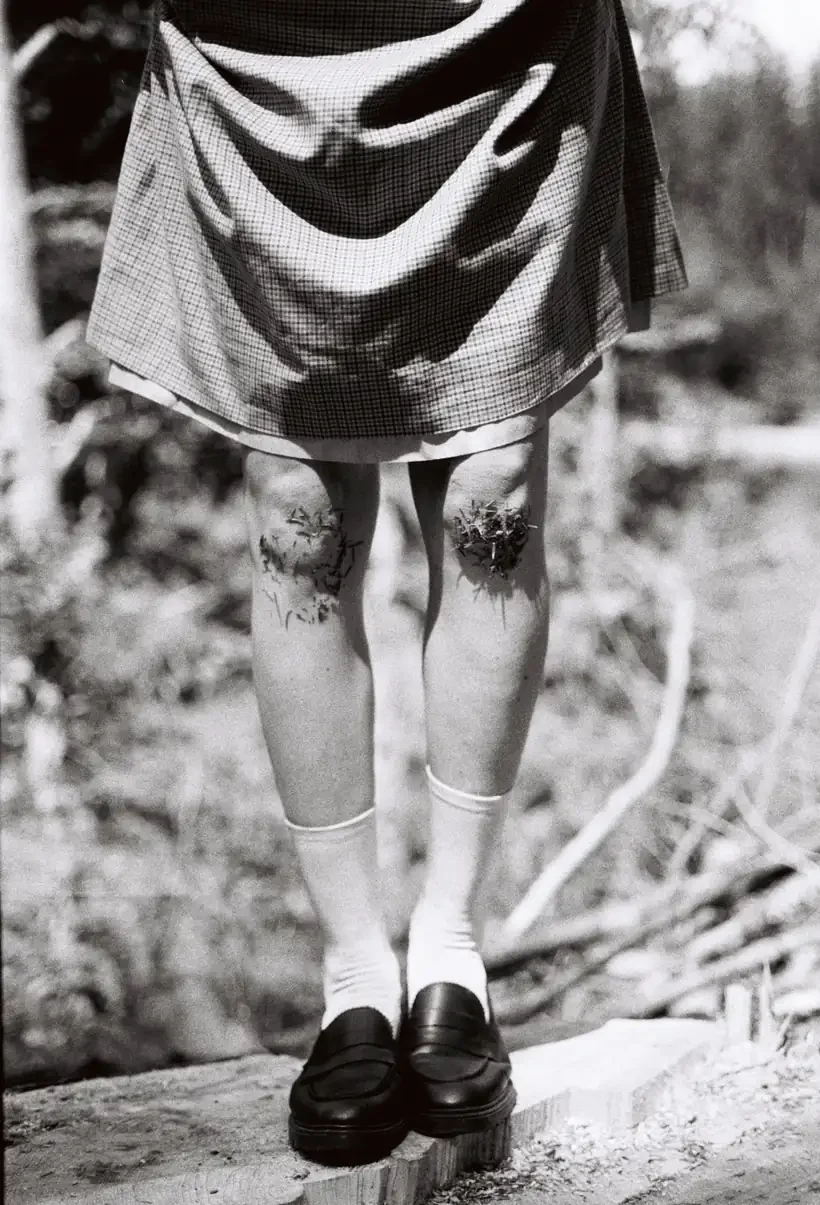
The kid who was always coming home with something stuck to her — messy, distractable, "not applying herself." Late diagnosis is often the moment that whole story gets a different explanation.
Why does an ADHD diagnosis change how you remember your life?
Same events, new explanation. Memory isn't a filing cabinet; it's a reconstruction, rebuilt each time you recall it, under whatever beliefs you hold in that moment. For most of your life, the working explanation for the missed deadlines, the messy room, and the friendships that thinned out was character: lazy, careless, flaky, too sensitive.
The diagnosis replaces the causal story. So every memory filed under "character flaw" comes up for re-filing, whether you asked it to or not. The diagnosis doesn't change what happened. It changes what it meant.
Research bears this out. Long and Coats pooled seven qualitative studies of adults diagnosed with ADHD in adulthood in a 2022 meta-synthesis in Family Practice, and found identity showing up as its own organizing theme, split into "identity before diagnosis" and "identity after diagnosis," with the diagnosis itself described as both a revelation and a burden. Both, at once. Keep that phrase; it's doing honest work.
Why doesn't "at least you know now" help?
Because it skips the grief. People mean well when they say it, and we'd still like to push back on it. Most advice for the newly diagnosed stops at it wasn't your fault, which is true, and which is where the real work begins rather than ends.
Here's the reframe we'd offer instead: reinterpretation is an active integration practice. If you don't do it deliberately, it does you, usually at 2 a.m., sometimes in the shower, occasionally mid-meeting when a 2009 memory arrives with no appointment. The re-rendering is going to happen either way. The only question is whether you're holding the pen.
And the grief is not a detour from the relief. In a 2025 mixed-methods survey of 28 late-diagnosed women, published by Holden and Kobayashi-Wood in Scientific Reports, participants described the diagnosis as revelatory, their lives finally making sense, while also reflecting on "what could have been" and grieving the lives they might have led if someone had noticed sooner. It's a small sample, and it matches what we hear in the room. Neither feeling cancels the other, and there's no stage model where you complete one and graduate. If you're waiting to feel only glad, you'll wait a long time and conclude something is wrong with you. Nothing is.
If the congratulations keep landing wrong and you can't explain why you cried in the car, that's a real thing to bring to a first conversation. Reach out for a free 20-minute consultation.
Where the re-rendering tends to start
Different memories come up for re-filing first for different women. These are the archives we see reopened most often.
The paper trail. Report cards, old performance reviews, the note a teacher sent home in 1996. Needs to apply herself reads differently once you know she was applying herself twice as hard as anyone in the room. The straight-A records re-render too; they stop documenting ease and start documenting masking.
The friendships that faded. The texts you meant to answer, the plans you cancelled twice and then stopped being invited to. What got read as not caring, by them and eventually by you, re-files as a brain that loses track of what it can't see.
The jobs that ended badly. The role you were brilliant at for eight months, until the novelty wore off. The improvement plan that listed symptoms without ever naming a condition.
The names you had at home. Spacey. Dramatic. Too much. Family shorthand that turns out to have been field notes on an unexplained neurology. The kid who carried those names is who this re-reading is really for.
The alternate timeline. The version of you who got support at nine. Visiting her occasionally is compassion. Moving in with her is despair, and it's worth knowing the difference before you unpack.

Moving through the world at your own pace instead of the one you were told to keep — and finding out it was never a discipline problem.
How to re-read your story on purpose
None of this requires a complete archive or a perfect memory. It requires a method and a lighter grip.
Give the audit office hours. Rumination loves an open calendar. Set a container: twenty minutes, a notebook, two or three times a week. When a memory shows up at midnight, tell it when its appointment is. Call it scheduling rather than suppression; the audit gets smaller once it stops being on call.
Re-read one record, three columns. Pick a single artifact (one report card, one review, one ended friendship) and write three columns: what happened, what it got blamed on, what was actually going on. One at a time. The re-filing is the practice; the whole archive is never the assignment.
Let grief and relief share the room. An ACT move we use constantly: name both, out loud. "I'm noticing relief." "I'm noticing grief." Naming a feeling loosens its grip on the steering wheel without evicting it from the car, and neither feeling has to win for you to keep living your day.
If that approach fits how your brain works, ACT for ADHD is built around exactly this move.
Meet the kid without reopening her case. Write to nine-year-old you as the adult who finally has her file, not as a judge relitigating her record. Retroactive compassion is the whole assignment. If the exercise tips into cataloguing everything she lost, stop for the day; that's the audit running you again.
Decline the full audit. You don't owe every memory a re-processing, and some can stay in the box. In a 2020 qualitative study of adults diagnosed in adulthood, published by Aoki and colleagues in BMC Psychiatry, participants described acceptance arriving gradually rather than at the moment of diagnosis, and needing real time to rethink how symptoms had shaped their lives. There's no completion certificate. Integration is measured by how you treat yourself now, not by archive coverage. Say the corrected version out loud, once, to one person. A partner, a friend, your therapist, a room of women who get it (our Sacramento Women with ADHD community hears these stories weekly). A re-read story spoken aloud stops being a private liability and starts being a history.
Whether you're six weeks or six years past diagnosis, if the re-reading still runs you instead of the other way around, this is exactly what individual therapy for women with ADHD at Brilla is built for. A free 20-minute consultation is the low-stakes way in.
What changes when the story changes
The events of your life are settled. The meaning never was; you've been revising it your whole life, mostly in the direction of self-blame, and a late diagnosis is simply the first revision made with accurate information. Done with care, the re-reading hands you back a history in which a kid was doing her best inside a brain nobody explained to her. That's not spin. That's accuracy. And accuracy, it turns out, is what self-trust is built from.
This piece pairs with our full guide to life after a late ADHD diagnosis, and if the grief is the loudest part right now, start with why the grief comes before the relief. There's no deadline on any of this, including the one you've quietly set for yourself.
Frequently asked questions
Why do I keep thinking about my childhood after my ADHD diagnosis?
Your memories are re-filing. Memory is reconstructive, so when the diagnosis replaces "character flaw" with "unsupported brain" as the explanation for old events, those events resurface to be re-understood. This is a documented part of the adult-diagnosis experience, and it settles as integration happens.
Is it normal to grieve after being diagnosed with ADHD as an adult?
Yes, and it's common. Research with late-diagnosed women finds grief for the life that might have been sitting right alongside relief that life finally makes sense. Neither feeling is a mistake, and they don't take turns; they run at the same time.
Why don't I remember much of my childhood at all?
Sparse childhood memory is commonly reported by adults with ADHD. Differences in attention and working memory can affect what got deeply encoded in the first place, though research here is still developing. An assessment doesn't require perfect recall; records, report cards, and family input help fill the gaps.
How do I stop replaying old memories at night?
Give them a daytime appointment. Scheduled reflection time, a notebook, and naming the feelings out loud all reduce the nighttime audit, because the brain loosens its grip on material it trusts will be handled. If the replays come with dread or panic most nights, bring it to a therapist rather than pushing through alone.
Does a late diagnosis mean my earlier years were wasted?
No. Those years were lived without an explanation, which is different from wasted. The skills, relationships, and competence you built while running uphill came with you, and reinterpreting your story means honoring that effort, never writing it off.
Do you work with newly diagnosed adults in Sacramento or online in California?
Yes, both. Brilla Counseling sees clients in person at 924 57th Street in East Sacramento and via telehealth throughout California, with specific focus on adults, women, and late-diagnosed clients doing exactly this post-diagnosis work. A free 20-minute consultation is the easiest starting point.
I'm a therapist. When should I refer a newly diagnosed client for this work?
When meaning-making stalls. If a client's post-diagnosis processing has turned into looping rumination about the past, escalating self-blame, or grief that isn't moving, ADHD-specific identity work can complement your treatment. You can send clients through our referral page and we'll coordinate care with you.
What this means for you
The replays are a feature of re-filing, not a relapse. Memory rebuilds itself under whatever explanation you currently hold. A new explanation reopens old files. That is the mechanism working, not you going backwards.
Grief and relief are not sequential. Both show up in the research and both show up in the room. You are not doing this wrong because the good news made you cry.
Unattended, the re-reading becomes rumination. Scheduled, it becomes integration. The difference is a container: a set time, a notebook, and permission to close it when the time is up.
You do not owe every memory a review. Acceptance builds gradually. Coverage of your entire archive was never the goal, and there is no certificate at the end of it.
A story said out loud stops being a liability. One person, one telling. That's the whole threshold for turning a private re-read into a history you get to keep.
At Brilla, we think the woman re-reading her third-grade report card at 38 is doing something more serious than dwelling. She is correcting a record that was filed wrong for thirty years, and she is doing it with better information than anyone gave her at the time. That work deserves a room, a method, and someone who understands why it matters. The point was never to finish the archive. The point is that the kid in it finally gets read accurately.
If this is the season you're in, you don't have to run the audit by yourself. Reach out for a free 20-minute consultation. And if you'd rather keep reading first, why the grief comes before the relief and our ADHD masking pillar cover the two feelings that tend to show up alongside this one.
