

ADHD Meltdowns from Video Games: It's Not Screen Time — It's the Game
The problem isn't video games. It's which video games — and whether anyone's looked closely enough to know the difference.
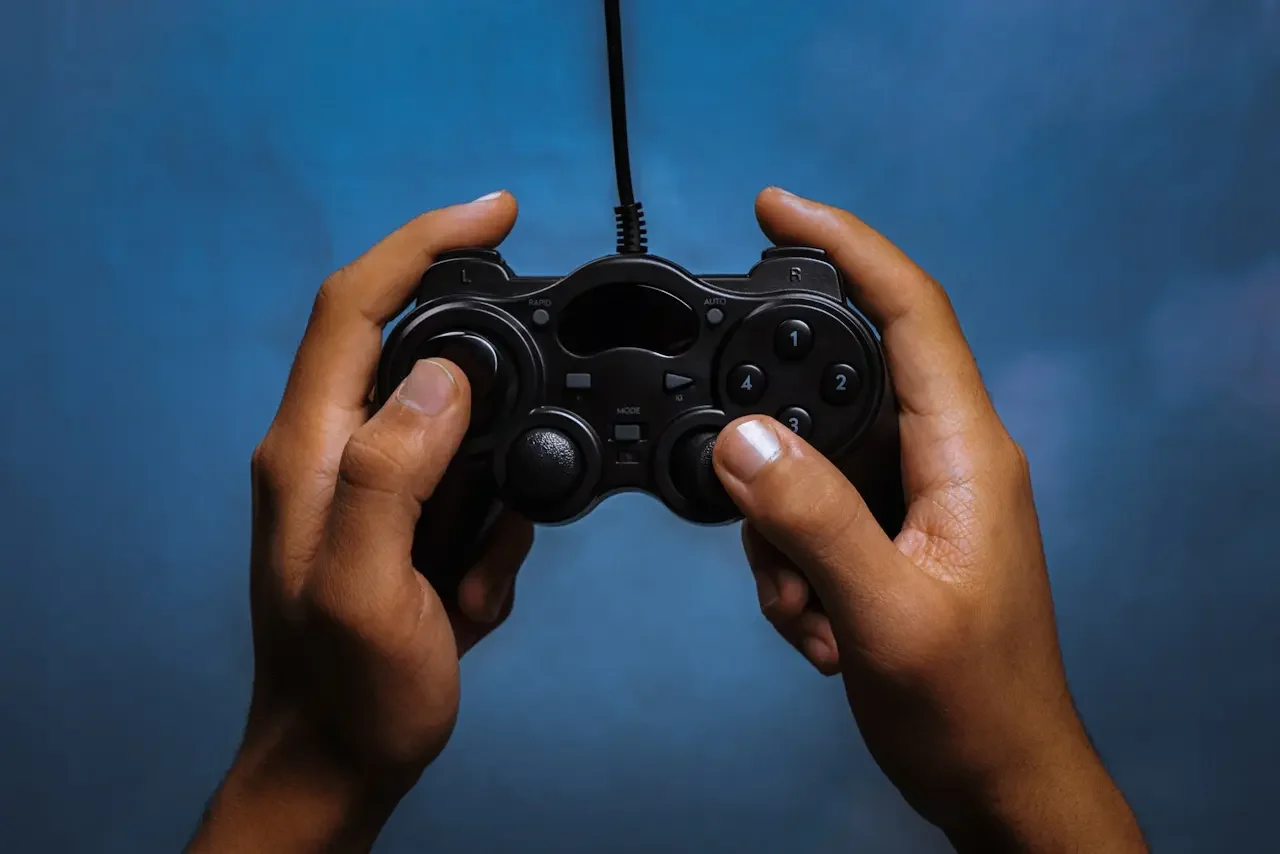
Tempted to cut the cord on your ADHD child's gaming setup? You're not alone.
Most of the advice parents get about ADHD and video games comes down to one question: how much screen time is too much? That's the wrong question. In my work with families navigating ADHD and behavioral regulation, the meltdowns parents describe almost never trace back to "too much time on screens." They trace back to a specific game, a specific setup, and a specific experience that the child's nervous system cannot handle. Until someone gets curious about what's actually happening inside that game, time limits are just managing the surface.
This is a clinical guide for parents who are tired of "set a timer" advice and want to know what's actually going on.
Why do video games trigger ADHD meltdowns in the first place?
Because the ADHD brain processes reward differently — and most modern games are engineered to exploit that difference, then drop it sharply when play ends.
Research from the Child Mind Institute and CHADD confirms that the same brain circuits and neurotransmitters that are underactive in ADHD are also involved in video game reward processing — and that gaming activates these circuits "similarly to stimulant medication and addicting drugs." Striatal dopamine release during gaming is, by some measures, comparable to the release seen with alcohol or psychostimulants.
Then the game ends. Dr. Clifford Sussman, a psychiatrist specializing in video game addiction, describes this as dopamine downregulation: once gaming stops, the brain's dopamine receptors drop sharply in the reward processing area — a state that resembles withdrawal. His exact phrase is the cleanest description of what every parent of an ADHD gamer has seen: "Turn off the game; cue the meltdown."
This is not your child being defiant. This is their brain trying to recover from a chemical state your living room was not designed to support.
Is screen time actually the problem?
No — and the American Academy of Pediatrics says so directly.
The AAP explicitly recommends focusing less on a strict number of hours and more on how screen use affects sleep, school, physical activity, and family life. The strict hourly cap is a popular myth that survives in parenting articles but doesn't survive contact with the research or the clinic.
The variable that matters is the game, not the clock. A child can play one type of game for 90 minutes and walk away regulated. The same child can play a different game for 20 minutes and need two hours to come down. Time spent is the wrong metric.
Struggling to figure out which games are causing ADHD video game meltdowns in your home? We help families in Sacramento and throughout California identify what's actually driving the dysregulation — and build a plan that fits your child's brain. Request your free consultation.
What makes some video games more dangerous for ADHD kids than others?
Three specific game design features predict trouble: punishment for absence, team-based social obligation, and competitive ranking systems.
Daily login rewards and decay mechanics. Some games are designed to punish you for not showing up. Miss a day, lose progress. Miss a session, your character's stats drop. "Decay mechanics" make your in-game self weaker when you don't play regularly. These systems are engineered to create habit formation — not fun. For a child who already struggles with delaying gratification, the design is brutal.
Team-based games where your absence has social consequences. When your kid's gaming team includes classmates, the stakes are not digital. If they don't log in or underperform, their teammates notice — and those teammates might be at school the next day. The fight you have at home about logging off is a fight against the social cost of not logging on.
Competitive ranking systems and battle royales. Games like Fortnite, ranked modes in Roblox PvP servers, or Valorant structure play around one winner out of dozens or hundreds. The design rewards persistence and punishes breaks. There is no good stopping point. There is always "one more match." This is exactly the structure that makes clean disengagement nearly impossible for an ADHD brain.
None of these are about minutes. They are about mechanics.
You called her three times. She didn't hear you.
What does an "ADHD-unsafe" gaming setup look like outside the game itself?
Sometimes the meltdown isn't about the game. It's about the setup around the game.
A child who can't compete at the level the game demands — because of equipment, skill, or design — is failing publicly and repeatedly in a space that feels genuinely high-stakes to them. They're watching peers succeed. They may be receiving negative feedback from teammates, some of whom might be older teens or adults the parent has never met. Voice chat may be unmoderated. If the social consequences carry into school, it stops being "just a game" very quickly.
That is not a discipline issue. That is an environment issue. No amount of setting a timer will address it.
How do I tell if a specific game is causing the problem?
Pay attention to patterns in your child's body, mood, and behavior — not the clock.
Here's a framework you can use right now.
The Brilla Three-Lens Game Audit
Before making any changes, audit the situation through three lenses:
Lens 1: The game itself.
What happens if your child doesn't log in for a few days? Does the game punish absence?
Is there a competitive ranking system, leaderboard, or season that resets?
Does the game have a clear stopping point — or is it designed to keep playing indefinitely?
Are there microtransactions or loot boxes that create urgency or scarcity?
Lens 2: The social setup.
Who is your child playing with — school friends, online strangers, adults?
Is voice chat on? Are messages filtered, or is your child exposed to unmoderated communication?
Is your child part of a team, guild, or clan? What are the social consequences of not showing up or underperforming?
Is the play cooperative or competitive?
Lens 3: Your child's reaction.
What does their body look like during and after play — tense, relaxed, explosive?
Do meltdowns happen during the game, or when it's time to stop?
Are they talking about the game constantly, even when not playing?
Do they seem genuinely happy when they play, or stressed and driven?
You are not looking for perfect answers. You are looking for patterns. If a specific game consistently precedes dysregulation across all three lenses, that's your data.
Need help running this audit and creating a plan that actually works? Our ADHD-informed family therapists can walk you through it. Get started now.
What do I do once I've identified the problem game?
Remove it. Not as a punishment. As a parenting decision.
"We're taking a break from this one. We're trying some things out." That is enough. You do not owe a long explanation. You do not need your child's buy-in. You can acknowledge their feelings without changing the decision: "I know you're upset. This is still what we're doing."
Some games are not compatible with some kids' brains, and recognizing that is part of the job. This is no different from any other call you make about your child's environment. If a particular food made them sick every time they ate it, you would not keep serving it and just limit the portions. You would stop serving it and find something else.
What should we play instead?
Replace, don't just restrict.
This is where most families get stuck. They remove the problem game, and now there's a void — and the kid is furious and bored and the house is worse than before.
The answer isn't subtraction. It's substitution. Some categories of game work much better for many ADHD brains:
Building and exploration: Minecraft in creative mode, Stardew Valley, Animal Crossing — games designed around making and discovering rather than winning.
Story-driven games: The Legend of Zelda series and similar single-player narratives that have an actual end.
Co-op games you can play alongside your child: A retro game, a couch co-op, a board game with real depth. The presence of an adult changes the social structure of the play and lowers the stakes.
The reframe that matters most: make the healthier option easier to earn, not harder. Instead of "you lost your game because of your behavior," try "we're opening up more ways for you to earn things you like." A day trip. A special outing. A new experience. You are not shrinking their world. You are expanding what's available to them.
Trying to navigate ADHD video game meltdowns and need support building a plan that doesn't just restrict? We work with families to create strategies that fit your child's brain and your family's reality. Request your free consultation.
What if my kid hates this and pushes back?
Expected. Do it anyway.
This is the part hardest for parents to sit with. Your child may be furious. They may tell you you're ruining their life. They may escalate before things get better.
But doing what's best for your child's brain is the whole job. Whether they appreciate it now, later, or never — you have still done right by them. Kids need their parents to make calls that protect their nervous system, even when those calls are unpopular.
The long-term relationship with your child is not built on whether you let them play a specific game at age nine. It is built on whether they felt like someone was paying attention to what they actually needed.
The Bigger Questions Behind the Gaming Meltdowns
When parents search for help with ADHD video game meltdowns, the question they bring is usually upstream of bigger ones:
Whether their child has an undiagnosed gaming disorder (recognized by the WHO in 2018 as Internet Gaming Disorder) — distinguished from heavy use by craving, impaired control, priority over other activities, and continuation despite negative consequences.
Whether the meltdowns at game shutoff are signaling something larger about their child's emotional regulation overall.
Whether the family needs a different structure, not just a different rule.
Whether their child's ADHD is more severe than they realized, since ADHD is one of the strongest known risk factors for problematic gaming behaviors.
If any of those is the question you're actually carrying, the gaming conversation is sitting on top of a bigger one. That is worth knowing before you spend another six months negotiating about Fortnite.
What this means for you
The meltdown is not defiance. It is your child's brain coming down from a dopamine state that resembles withdrawal. Treat it accordingly.
Screen time is not the variable. The specific game and its design are.
Three mechanics predict trouble: punishment for absence, team-based social pressure, and competitive ranking systems.
Run the Three-Lens Audit — game, setup, reaction — before you change anything. Data first, decision second.
If a game is consistently causing dysregulation, removing it is a parenting decision, not a punishment.
Replace, don't just restrict. The healthier alternative needs to be easier to access, not harder.
Your child will be upset. That is expected. Protecting their nervous system is still the job.
Frequently asked questions
Why do video games trigger meltdowns in kids with ADHD?
It's a dopamine crash. During play, highly stimulating games flood the ADHD brain's reward system, and when the game stops, dopamine drops sharply into a state that can resemble withdrawal — what one psychiatrist sums up as 'turn off the game, cue the meltdown.' The meltdown isn't defiance; it's your child's nervous system struggling to recover from a chemical high. That's why which game your child played matters more than how many minutes they spent.
Is screen time really the problem?
Usually not. The American Academy of Pediatrics recommends focusing less on a strict hourly cap and more on how gaming affects sleep, school, physical activity, and family life. A child can play one game for 90 minutes and stay regulated, then melt down after 20 minutes of a different one. The design of the game predicts trouble far better than the number on the clock.
How can I tell which specific game is causing the meltdowns?
Look for patterns, not minutes. Watch three things: the game itself (does it punish you for not logging in, or run endless competitive rankings with no natural stopping point?), the social setup (teammates, unmoderated voice chat, or classmates who carry it into school), and your child's body and mood during and after play. If one game consistently comes before dysregulation across all three, that's your evidence — not a behavior to punish.
My child rages when I say stop — are they just being defiant?
Almost never defiance. A meltdown at shut-off is an emotional-regulation response, not a deliberate choice to misbehave — the ADHD brain is coming down from a reward state it can't easily steady on its own. Naming it as neurological rather than 'bad behavior' changes what you do next: you're helping a nervous system recover, not winning a power struggle. That shift usually lowers the temperature for everyone.
What do I do once I've found a game that keeps causing meltdowns?
Remove it, then replace it. Taking a problem game out is a parenting decision, not a punishment your child has to earn back — 'we're taking a break from this one' is a complete enough explanation. Then fill the gap with games that tend to fit ADHD brains better: building and exploring games like Minecraft creative mode, Stardew Valley, or Animal Crossing, story games with an actual ending, or co-op games you play alongside them. Make the healthier option easier to reach, not harder.
Do you help families in Sacramento with ADHD and gaming meltdowns?
Yes. Brilla Counseling works with families in person in East Sacramento and via telehealth across California, including San Diego. We help you run the audit, pinpoint what's actually driving the dysregulation, and build a plan that fits your child's brain instead of a generic behavior chart. A free 20-minute consultation is a low-pressure place to start.
Is video game addiction a real diagnosis?
It can be. The World Health Organization recognized Internet Gaming Disorder in 2018, marked by craving, impaired control, prioritizing gaming over other activities, and continuing despite clear negative consequences — which is different from simply playing a lot. ADHD is also one of the strongest known risk factors for problematic gaming. If the meltdowns come alongside those signs, it's worth talking with an ADHD-informed clinician.
At Brilla Counseling, we work with families across California to understand what's actually driving ADHD meltdowns — gaming-related or otherwise — and build plans that fit your child's brain instead of a generic behavior chart.
Request your free consultation. | Learn more about ADHD family therapy.
