

ADHD and Sleep: Why Your Brain Won't Close the Tab
It is 1 a.m. The house is finally quiet. Everyone who needs something from you is asleep. And for the first time all day, no one is going to interrupt you — so your brain picks this exact moment to come fully, gloriously online.
You know you should be asleep. You want to be asleep. Tomorrow-you is going to be furious. But there is a specific, guilty pleasure in this hour that you cannot quite name, and every time you tell yourself five more minutes, the scroll keeps going, or the next episode starts, or you fall down a research hole about a thing you did not know you cared about until 1 a.m.
Then there is the other version of this: you are not on your phone at all. You put it down. You lay down at a reasonable hour like an adult. And your body is exhausted — genuinely, heavily tired — but your mind will not switch off. It is replaying a conversation from three years ago. It is drafting an email you do not need to send. Tired body, wide-awake brain, and no obvious way to bridge the gap.
If either of those is familiar, you are not lazy, and you are not broken. You are describing two of the most well-documented features of the ADHD brain at night, and there are real reasons both of them happen to you and not to your partner who is already snoring.
What it is: The collision of a documented biological delay in the ADHD body clock with a nightly values conflict — night is often the first unclaimed hour of your day, and "go to sleep" can feel like surrendering the only time that felt like yours.
What it costs: Staying up long past when you meant to, then waking at 3 a.m. with a brain already running. Chronic sleep debt that makes every ADHD symptom worse the next day — focus, mood, memory, impulse control. Years of self-blame for what is partly a clock problem and partly an autonomy problem, not a discipline one.
Why "just put the phone down" is bad advice: It treats the scroll as the disease when it's the symptom. The real move is to stop moralizing the late night and instead put autonomy back into your daytime so the night doesn't have to carry all of it — and to work with your delayed body clock instead of declaring war on it.
↓ Keep reading for what the ADHD sleep problem actually is, why it hits women and late-diagnosed adults so hard, and 8 specific moves that actually help.
At Brilla Counseling in Sacramento, we specialize in helping women with ADHD understand why the ordinary advice keeps failing them. In over a decade of clinical work with neurodivergent women — in our East Sacramento office and via telehealth across California — we've watched the same scene repeat: a woman who is exhausted, who has read every sleep-hygiene listicle, who has bought the blue-light glasses and the weighted blanket, and who still cannot understand why she does this to herself every single night. What's usually happening is that she's fighting two things at once — her own biology and her own hunger for a scrap of unclaimed time — and no one told her that either one was real.
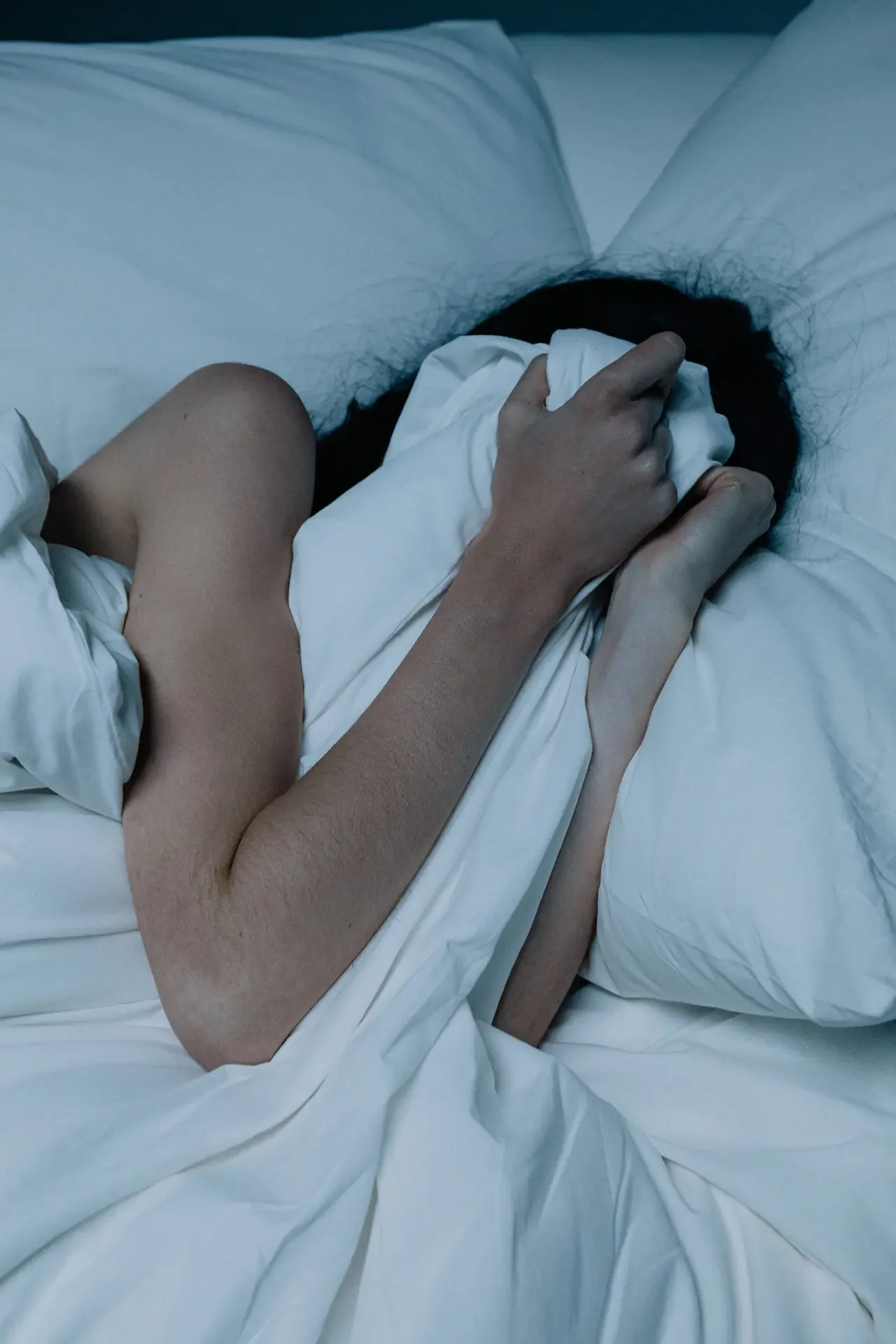
It's 1 a.m. Your body is exhausted. Your brain didn't get the memo.
What is the ADHD sleep problem?
Two problems wearing one costume. The first is biological: a large share of people with ADHD run on a delayed body clock, so the signal to feel sleepy arrives hours later than it does for everyone else. The second is behavioral and emotional: bedtime is often the first moment all day that no one is asking anything of you, and the brain does not want to give that up. They stack on top of each other, which is why the usual sleep advice — aimed at only one of them — so rarely sticks.
The biology is not vague. Adults with ADHD and chronic trouble falling asleep show a measurably delayed melatonin onset and a delayed sleep window compared with people without ADHD, according to research retrieved from PubMed (Van Veen et al., 2010, DOI). Your "I'm not tired yet" at midnight is not a story you're telling yourself. It's a hormone that hasn't shown up yet.
The behavioral half has a name people recognize the second they hear it: revenge bedtime procrastination — staying up to reclaim leisure time the day swallowed. Layer the two together and you get the trademark ADHD night: wired long past bedtime, then wide awake again at 3 a.m.
Why doesn't "just put the phone down" work?
Because the phone isn't the disease. You've probably been told the fix is discipline — a charging station in the kitchen, a hard screen curfew, more willpower at the exact hour of day when you have the least of it left. We want to gently challenge that, because it aims at the wrong target.
The phone is not why you're avoiding bed. The phone is what you reach for because bed means the day is over, and the day never contained a single moment that belonged only to you. Take the phone away and the pull toward the unclaimed hour is still there — it just goes looking for a book, a project, a cleaning spree, a research spiral instead. Confiscating the tool without addressing the need is why the charging-station-in-the-kitchen plan works for about four nights.
This reframe matters because it changes what you do next. If the late night is a discipline failure, the answer is more rules and more shame, and you will lose that fight because you have been losing it for years. If it's a biological delay stacked on an autonomy hunger, the answer is completely different: work with the clock, and give the day back some of the freedom the night is trying to steal.
If this is landing a little too close to home, you don't have to untangle it by yourself. We work with women navigating exactly this collision. Reach out for a free 20-minute consultation.
Why does the ADHD brain run late at night?
The clock is set later. Across a large share of people with ADHD, the whole circadian system runs on a delay — melatonin releases later, core body temperature drops later, and the felt sense of sleepiness arrives late enough that a "normal" bedtime means lying in the dark waiting for a signal that isn't coming yet.
This is one of the most replicated findings in the ADHD sleep literature. Delayed sleep phase disorder — a genuine circadian rhythm disorder, not a habit — shows up in an estimated 73–78% of children and adults with ADHD, according to a review retrieved from PubMed (Bijlenga et al., 2019, DOI). The same review goes a step further and argues that for a meaningful subgroup, part of what looks like daytime ADHD is actually the downstream cost of chronic circadian disruption — which is a polite scientific way of saying some of your worst "ADHD days" may really be sleep-debt days in disguise.
There's a hopeful corollary buried in that research. Because the problem is a phase problem, phase-shifting interventions help: in a pilot study retrieved from PubMed, using timed morning bright light to nudge the body clock earlier advanced participants' melatonin onset and was linked to a measurable drop in ADHD symptom scores (Fargason et al., 2017, DOI). Working with the clock does something. Yelling at the clock does not.
Why does this hit women and late-diagnosed adults harder?
More load, later diagnosis, less slack. The delayed clock is neurological, but the women we see aren't only fighting biology — they're fighting a day that was fuller than anyone acknowledged, and a nervous system that was never given permission to stop.
If you recognize yourself in any of these, you are not imagining it.
The only-hour-that's-mine. Your whole day was spent responding — to a manager, a kid, a partner, a group chat, a to-do list that regenerates faster than you can clear it. Night is the first hour no one can interrupt. Going to sleep doesn't feel like rest. It feels like handing back the one thing that was yours.
The wired-tired paradox. Your body is heavy and done. Your brain is sprinting. You lie down and the mental tabs all reopen at once — the awkward thing you said, the email you forgot, a memory from 2009 for no reason. This is the ADHD brain struggling to downshift, and it feels qualitatively different from ordinary tiredness.
The 3 a.m. wake-up. You fell asleep fine. Then you're awake in the dark with your mind already at full volume, and it takes an hour to come back down — if it comes down at all. By morning, coffee can't reach the kind of tired you are.
The hyperfocus trap. At 11 p.m. you finally found the dopamine the day withheld — a project, a game, a deep dive — and now the part of your brain that's supposed to say time to stop has left the building. You are not choosing to stay up. You genuinely cannot find the exit.
The shame tax. On top of all of it sits the story that a functioning adult would just go to bed, which turns a biology-and-autonomy problem into a character verdict — and the shame itself is activating, which keeps you up longer.
If you're reading this at an hour you'd rather not admit to, that's not a coincidence — it's the pattern. You don't have to keep white-knuckling it alone. Reach out for a free 20-minute consultation.

"Just five more minutes" was two hours ago.
What if it's not just ADHD — what if it's autism too?
For a lot of late-diagnosed women, the sleep picture has a second layer no one named: they're not only ADHD, they're also autistic. The two travel together far more often than most people realize. In a systematic review retrieved from PubMed, ADHD symptoms were found to commonly co-occur in autistic people — so common that a formal dual diagnosis wasn't even permitted until 2013 (Eaton et al., 2023, DOI). This overlap isn't a coincidence of labels; the two conditions share overlapping patterns in brain development, and a meta-analysis retrieved from PubMed found those shared differences actually grow more pronounced with age (Zhang et al., 2023, DOI). Some people use the shorthand AuDHD for this combination. If the ADHD sleep story above resonated but never felt like the whole story, this may be why.
When autism is in the mix, a few extra things are usually going on at night — and they call for their own adjustments:
- The melatonin signal itself can run low or off-schedule. Reduced melatonin secretion has been documented in autistic people, which is part of why sleep onset can be so stubborn — the chemical cue to feel sleepy may be quieter than it should be. In a review retrieved from PubMed, supplemental melatonin was associated with improvements in how long it took autistic people to fall asleep and in overall sleep quality, and it was generally well tolerated (Lalanne et al., 2021, DOI). This is a conversation for your prescribing provider, not a DIY experiment — dose and timing matter, and they're the person to work them out with you.
- The sensory environment isn't a luxury — it's the whole ballgame. For an autistic nervous system, the tag in the pajamas, the hum of the fridge two rooms over, the streetlight leaking past the curtain, or sheets that feel "wrong" aren't minor annoyances you should be able to ignore. They're genuine barriers to downshifting. Treating your bedroom as a sensory instrument — blackout curtains, the exact bedding texture that feels right, earplugs or a fan for consistent sound, a temperature you actually like — does more real work here than any willpower-based sleep rule.
- Routine and predictability do heavy lifting. Autistic brains often settle faster when the run-up to sleep is the same set of steps in the same order every night. This isn't rigidity for its own sake; a predictable sequence lowers the load on a system that's spent all day processing more input than most people realize. A fixed, low-stim shutdown ramp — same steps, same order — is often more effective than a "relaxing" routine you have to reinvent each night.
- Sudden transitions are their own obstacle. Being asked to go from an absorbing activity straight to lights-out is hard for an ADHD brain and often harder for an autistic one, where shifting gears mid-task carries a real cost. Building in a genuine buffer — a clear signal that the day is wrapping, not a hard stop — respects how your brain actually moves between states.
What helps when ADHD and sleep collide
There is no single switch for this. There are specific moves that consistently help the women we work with, and every one of them assumes you have already been trying hard. Each is offered in that spirit.
- Stop moralizing the late night. The scroll is a symptom, not a moral failing. When you frame bedtime as a character test you fail nightly, you add shame — and shame is activating, so it keeps you up. Drop the verdict first. You cannot behaviorally change a pattern you're too ashamed to look at directly.
- Put autonomy back into the daytime. This is the actual fix for revenge bedtime procrastination. If the night is where you claw back the freedom the day denied you, the move is to build unclaimed, no-one-needs-anything-from-you time into daylight hours — even 20 minutes that are genuinely yours. When the day contains some freedom, the night doesn't have to smuggle all of it in at 1 a.m.
- Work with the delayed clock, not against it. Your body clock runs late; you can nudge it, but you probably can't bully it into a 9:30 bedtime. Anchor a consistent wake time and get bright light into your eyes early in the day — morning light is the strongest lever for shifting a delayed phase earlier, and it's the mechanism behind the light-therapy research above. Slow and consistent beats dramatic and abandoned.
- Build a shutdown ramp, not a hard stop. Brains with a delayed clock and a busy default network cannot slam from 60 to 0. Give yourself a 30–45 minute downshift — lights dimming, stimulation dropping, one low-stim thing you actually like. You are not being indulgent. You are giving a slow-to-downshift system the runway it needs.
- If you're also autistic, treat the sensory setup as non-negotiable. ADHD and autism co-occur often enough that a formal dual diagnosis wasn't even allowed until 2013, according to a systematic review retrieved from PubMed (Eaton et al., 2023, DOI). If that's you, the room itself is doing more than you think. The scratchy tag, the fridge hum two rooms away, the streetlight past the curtain, the sheets that feel wrong — these aren't things you should be able to ignore, and ignoring them costs you sleep. Tune the environment like an instrument: blackout curtains, the exact bedding texture that feels right, earplugs or a steady fan, a temperature you actually like. This is real work, not fussiness — and for an autistic nervous system it often outperforms every willpower-based rule on this list.
- Externalize the racing mind. When you lie down and the tabs reopen, the brain is often just afraid it'll forget. Keep a notepad by the bed and offload it — tomorrow's tasks, the thing you replayed, the email. Getting it out of working memory and onto paper tells the brain it's safe to stop holding.
- Treat sleep as medical, not optional. Sleep debt makes every ADHD symptom measurably worse the next day, and then a worse day feeds a worse night. Protecting sleep isn't precious; it's clinical. The unglamorous basics — consistent wake time, a cool dark room, screens dimmed on the ramp — earn their keep here.
- Take the biology to a prescriber, not just to yourself. If the delayed phase is severe, or racing thoughts and stimulant timing are tangled up in it, that's a conversation for your prescribing provider — about medication timing, and about whether something like melatonin timing or light therapy fits your situation. We're therapists, not prescribers; we help you get clear on what to bring into that medical conversation so it doesn't stall.
- Get a clinician who treats the whole picture. Generic sleep advice misses the ADHD clock. Generic ADHD support misses the autonomy conflict driving the late night. The women who make progress here tend to work with someone who can hold the biology, the behavior, and the shame at the same time — which is what individual therapy for women with ADHD at Brilla is built to do.
What's Underneath the Sleeplessness?
In over a decade of clinical work with women with ADHD, we've noticed that when someone asks how to fix their sleep, the surface question is rarely the real one. Usually it's pointing at something underneath.
You are exhausted in a way sleep alone won't fix. The tiredness isn't only about hours. It's the fatigue of a day spent performing competence and availability for everyone else, with nothing left over. The night scroll is a small, sideways attempt to feel like a person instead of a function. Fix the depletion and the night starts to loosen on its own.
You're mourning the version of you who could "just go to bed." Somewhere there's a belief that a real adult wouldn't struggle with this, and every 2 a.m. is evidence against your own adequacy. That grief is real. It's also based on a comparison to a neurotypical clock you were never running on.
You're afraid the exhaustion is just who you are now. It isn't. When the biology gets worked with instead of fought, when the day gives back some freedom, and when the shame stops adding fuel at midnight, the nights change. Not into someone else's nights. Into ones your actual brain and body can sustain.
You're not undisciplined. Your clock is late and your day is too full.
We mean this plainly. The story you've been told — that you'd sleep fine if you just had more willpower and put the phone down — has cost you years of self-blame for something that is substantially biological and partly a fair protest against a day with no room in it.
Healing here doesn't look like becoming a person who's asleep by ten and up with the sun. It looks like building a sleep life that the brain and body you actually have can hold — a clock nudged gently earlier, a day with a little more of your own in it, and a night that isn't asked to carry the weight of the whole day. That's a different project than the one the sleep-hygiene articles hand you. We think it's the more honest one. And we believe rest doesn't have to look neurotypical to be real.

Rest isn't a luxury for an ADHD brain. It's the foundation everything else runs on.
Frequently asked questions
Why can't people with ADHD fall asleep even when they're exhausted?
Often a delayed body clock. Research retrieved from PubMed shows adults with ADHD and chronic sleep-onset insomnia have a delayed melatonin onset and a delayed sleep window (Van Veen et al., 2010, DOI). The signal to feel sleepy arrives hours later than it does for other people, so the body can be heavy-tired while the brain stays online.
Is revenge bedtime procrastination an ADHD thing?
It's strongly associated. Revenge bedtime procrastination is delaying sleep to reclaim leisure time the day didn't allow, and it lands especially hard for ADHD brains that spent the whole day under-rewarded and over-directed. For many women, the late night is less about the phone and more about it being the first hour no one else needs anything from them.
At what point is ADHD sleep trouble a real disorder and not just a habit?
Frequently it's a documented circadian disorder. Delayed sleep phase disorder appears in an estimated 73–78% of children and adults with ADHD, according to a review retrieved from PubMed (Bijlenga et al., 2019, DOI). If you've run late your whole life and no bedtime routine has ever moved the needle, that's a phase problem, not a willpower problem — and it's worth naming with a clinician.
Does fixing sleep actually improve ADHD symptoms?
It can, meaningfully. Sleep debt worsens focus, mood, memory, and impulse control the next day. And in a pilot study retrieved from PubMed, shifting the delayed body clock earlier with timed morning bright light was linked to a measurable reduction in ADHD symptoms (Fargason et al., 2017, DOI). Treating the sleep is treating the ADHD, not a separate errand.
What if I have both ADHD and autism? Does that change the sleep advice?
It adds to it. ADHD and autism co-occur frequently — commonly enough that clinicians couldn't formally diagnose both together until 2013, according to a systematic review retrieved from PubMed (Eaton et al., 2023, DOI). Some people call the combination AuDHD. Two things tend to matter more when autism is in the picture. First, the melatonin signal itself can run low: reduced melatonin secretion has been documented in autistic people, and in a review retrieved from PubMed, supplemental melatonin was linked to falling asleep faster and better sleep quality — though dose and timing are a conversation for your prescriber, not a DIY experiment (Lalanne et al., 2021, DOI). Second, the sensory environment and a predictable, same-every-night wind-down do far more heavy lifting than they do for ADHD alone. The good news is that everything else in this piece still applies — you're just working with a couple of extra levers.
Do you help with ADHD and sleep in Sacramento or online in California?
Yes. At Brilla Counseling in Sacramento, we offer individual therapy for women with ADHD in our East Sacramento office and via telehealth across California, including the daily patterns — like sleep, autonomy, and burnout — that keep the nights hard. You can start with a free 20-minute consultation.
I'm a therapist — can I refer a client who's stuck on this?
Absolutely. We take referrals for adults and women with ADHD across California via telehealth and in person in Sacramento, and we're comfortable holding the overlap of circadian, behavioral, and shame-based drivers of sleep trouble. Reach out and we'll make the handoff easy.
What this means for you
- Your late night is two problems, not one. A delayed body clock (biology) stacked on an autonomy hunger (the only unclaimed hour of your day). Advice that only addresses one will keep failing.
- The clock is real and it's documented. Delayed melatonin and delayed sleep phase are among the most replicated findings in ADHD sleep research. "I'm not tired yet" at midnight is often literally true.
- "Put the phone down" targets the symptom. The pull toward the night isn't the phone — it's the need for a scrap of time that's yours. Give the day back some freedom and the night loosens.
- Work with the clock, not against it. Consistent wake time plus early bright light nudges a delayed phase earlier — and shifting the phase has been linked to fewer ADHD symptoms, not just better sleep.
- The right care holds all of it. Biology, behavior, and shame at once. That's the difference between another sleep-hygiene handout and something that actually changes your nights.
At Brilla, we believe the woman who's awake at 1 a.m. reclaiming an hour of her own life already understands something the sleep-hygiene articles keep missing: that she is not the problem, the arrangement is. The work isn't forcing your brain onto someone else's schedule. It's building a life — days included — that the brain and body you actually have can rest inside. Self-trust gets to grow back. Just on a slightly later clock this time.
If you're reading this and recognizing yourself, you don't have to keep figuring it out alone. We work with women navigating exactly this. Reach out for a free 20-minute consultation. And if you want to keep reading first, our pieces on ADHD time blindness and pathological demand avoidance in adults with ADHD often land in the same emotional neighborhood — the second one especially, if the autonomy piece hit hardest.
